
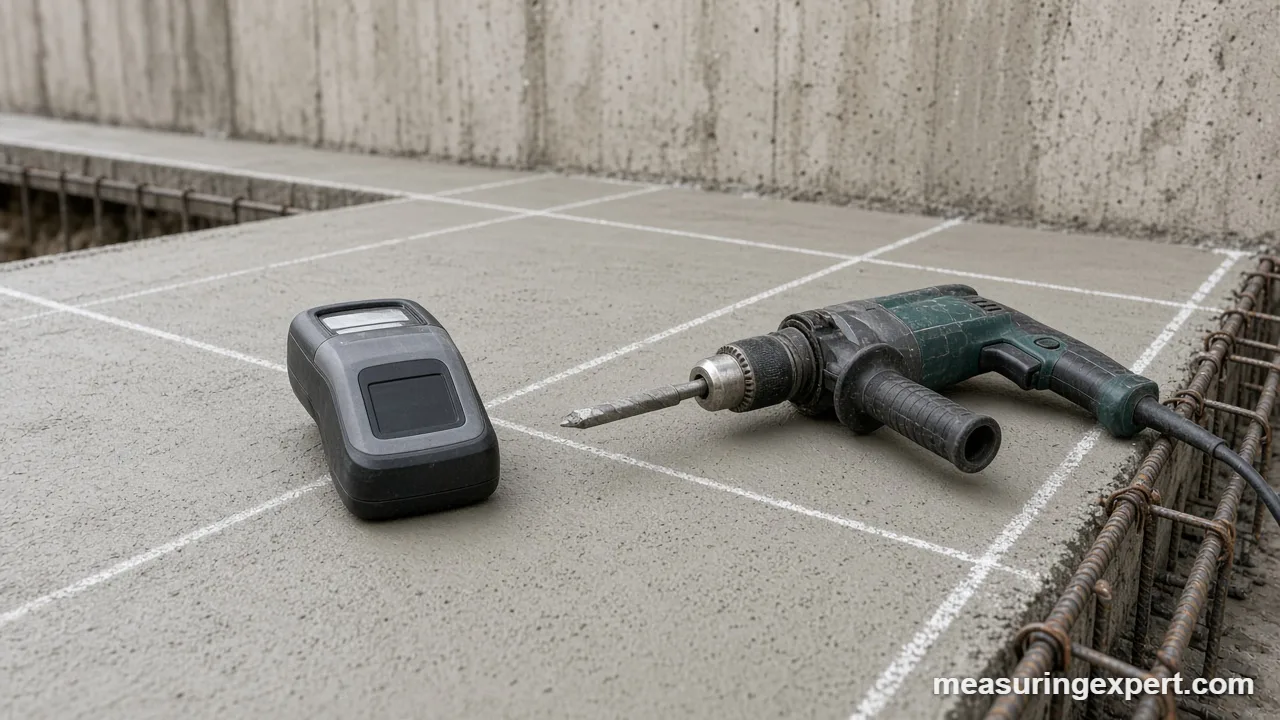
The best rebar locator for most contractors and serious DIYers is the Bosch D-tect 120, a radar wall scanner with a concrete mode that finds steel up to 4-3/4 in. deep. However, the right tool depends on whether you only need to avoid rebar or must measure concrete cover like an inspector.
In short: Bosch D-tect 120 for drilling safely, Bosch GMS 120 for a low-cost metal check, the Zircon MT7 or MT X for dedicated rebar scanning, the Makita DWD181ZJ for the deepest metal reading here, and a covermeter such as the ZBL-R630A when you need cover depth numbers.
As an Amazon Associate, Measuring Expert earns from qualifying purchases. Our picks are based on research, specifications and owner feedback, not paid placement.
Best Overall


Best Covermeter
Quick Answer: Which Rebar Locator Fits Your Job?
- Drilling anchors in slabs and walls: the Bosch D-tect 120 uses UWB radar and has a dedicated concrete mode.
- Occasional metal checks on a budget: the Bosch GMS 120 senses steel up to 4-3/4 in. in metal mode.
- Rebar-only scanning: the Zircon MetalliScanner MT7 locates steel up to 6 in. and tells ferrous from non-ferrous metal.
- Marking a rebar grid: the Zircon MT X adds an integrated marker and a DeepScan mode.
- Deepest metal reach in this list: the Makita DWD181ZJ lists metal detection to 7-1/16 in. and runs on an 18V LXT battery.
- Measuring concrete cover: a covermeter such as the ZBL-R630A or HOJILA JW-120X, or a pro unit from Proceq or Hilti.
On This Page
- Comparison table
- The 7 picks, reviewed
- How we chose
- Covermeter vs wall scanner vs GPR
- Specs that matter
- Cover depth converter
- How to scan concrete for rebar
- Honest limits
- FAQ
- Bottom line
Best Rebar Locator Comparison Table
First, decide whether you only need to miss the steel or must also measure it. Then, use the table to jump to the matching review.
| # | Product | Best For | Standout Feature | Amazon |
|---|---|---|---|---|
| 1 | Bosch D-tect 120 | Most drilling jobs | UWB radar with a concrete mode | View |
| 2 | Bosch GMS 120 | Low-cost metal checks | Steel to 4-3/4 in., 9V battery | View |
| 3 | Zircon MetalliScanner MT7 | Dedicated rebar scanning | Rebar to 6 in., ferrous vs non-ferrous | View |
| 4 | Makita DWD181ZJ | Cordless crews | Metal to 7-1/16 in., 4 in. color screen | View |
| 5 | Zircon MetalliScanner MT X | Marking rebar grids | Integrated marker, sunlight-readable LCD | View |
| 6 | ZBL-R630A | Cover depth surveys | Integrated covermeter-style locator | View |
| 7 | HOJILA JW-120X | Compact cover checks | Listed for 120 mm cover, 6-50 mm bars | View |
The 7 Best Rebar Locator Picks, Reviewed
First, we start with the wall scanners that most trades already carry. Next come two dedicated metal scanners from Zircon. Finally, we cover two covermeter-style instruments for people who need depth numbers, not just a warning light.
Best Overall
1. Bosch D-tect 120 Wall and Floor Scanner
Best for: electricians, plumbers and remodelers who drill into concrete and want to miss the steel.
The D-tect 120 is our best rebar locator for most people because it is built for concrete, not just drywall. Bosch uses ultra-wide band (UWB) radar and gives you three modes: drywall, universal and concrete. As a result, one tool covers studs, pipes and rebar on the same job.
On the measuring side, Bosch lists ferrous and non-ferrous metal detection up to 4-3/4 in. (about 120 mm) and live copper wiring up to 2-3/8 in. (6 cm). Meanwhile, the display uses arrows, a center line and a green, orange and red code. In other words, it tells you where steel sits, but it is not a covermeter that reports bar size.
- Technology: UWB radar, calibration-free at power-on
- Metal depth: up to 4-3/4 in. (120 mm)
- Modes: drywall, universal and concrete
- Power: four AA batteries; 1.1 lb
- Operating range: 14 to 104 F (-10 to 40 C)
Pros
- Concrete mode is made for rebar and conduit
- Also sees wood and plastic pipe
- No calibration routine before each scan
Cons
- Bosch does not publish a bar-size or cover accuracy figure
- Lower rebar layers can hide behind the top mat
Skip it if: you must document concrete cover for an inspector, since a covermeter does that job.
Best Budget
2. Bosch GMS 120 Multi-Scanner
Best for: homeowners who drill into a slab now and then and want a quick metal warning.
The GMS 120 is a compact multi-scanner with three modes: wood, metal and AC wiring. In metal mode, Bosch lists steel detection up to 4-3/4 in. That matches the D-tect 120 on paper, so it is a sensible budget pick for a garage floor or a basement wall.
However, it has no radar and no concrete mode. So it gives a center point and a warning, without the extra detail of a concrete scanner. For example, it can tell you where a bar crosses your drilling spot, but it will not map a dense grid as cleanly as a dedicated scanner.
- Ferrous metal depth: up to 4-3/4 in. (120 mm)
- Non-ferrous metal (copper): up to 3-1/8 in. (80 mm)
- Live AC wiring: up to 2 in. (50 mm)
- Modes: wood, metal, AC wiring; automatic calibration
- Power: one 9V battery
Pros
- Same steel depth figure as the D-tect 120
- Small enough for a tool pouch
- Center finder marks the drilling point
Cons
- No concrete-specific mode
- Wood mode is meant for drywall, not concrete
Skip it if: you scan concrete every week, because a dedicated rebar scanner saves time.
Best Dedicated Scanner
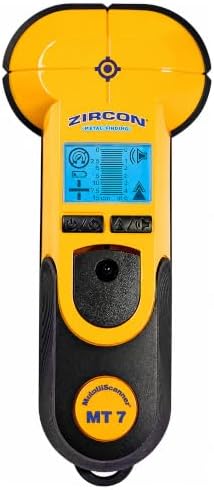
3. Zircon MetalliScanner MT7
Best for: trades who only care about metal in concrete, block, tile or stone.
In short, the MT7 does one thing: it finds metal. Zircon rates it for rebar up to 6 in. (152 mm) deep, plus or minus 1 in. (25 mm). Also, it separates ferrous metal such as rebar from non-ferrous metal such as copper pipe. That matters when you need to know whether a target is steel or a water line.
Zircon quotes position accuracy within 1/2 in. (13 mm) on 1/2 in. (#4) rebar. In addition, you get Standard and DeepScan modes, a backlit LCD and a pivoting handle for overhead work. Note the depth tolerance, though: a 1 in. spread is fine for avoiding steel, but too wide for a cover report.
- Rebar depth: up to 6 in. (152 mm), plus or minus 1 in. (25 mm)
- Position accuracy: within 1/2 in. (13 mm) on #4 rebar
- Modes: Standard and DeepScan; ferrous vs non-ferrous
- Power: 9V battery; splash resistant, not waterproof
- Weight: 10.3 oz without battery
Pros
- Deepest rated rebar reach of the handheld metal scanners here
- Tells steel from copper
- Pivoting handle helps on ceilings
Cons
- Metal only: no wood, plastic or live-wire mode
- Depth tolerance of 1 in. is coarse
Skip it if: you also need to find plastic pipe, since only the radar scanners here do that.
Best Cordless
4. Makita DWD181ZJ 18V LXT Multi-Surface Scanner
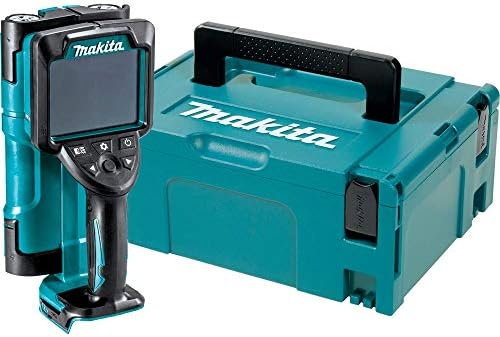
Best for: crews already on Makita 18V batteries who scan all day.
By contrast, the DWD181ZJ is a bigger, tool-style scanner. Makita lists a maximum metal depth of 7-1/16 in. (about 180 mm), which is the deepest figure in this guide. Meanwhile, plastic pipe and shielded wire are listed to 4-23/32 in. (120 mm).
In addition, the 4 in. color screen shows the center, edges and the relative width and depth of objects. A multi-detection mode scans up to three parallel lines, and a laser guide helps you mark them. Even so, it is sold as a bare tool, so budget for a battery and charger if you do not own them.
- Metal depth: up to 7-1/16 in. (180 mm)
- Plastic pipe and shielded wire: up to 4-23/32 in. (120 mm)
- Display: 4 in. illuminated color screen
- Power: 18V LXT battery (sold separately), up to 28 hours per charge
Pros
- Deepest listed metal reach in this list
- Shows relative width and depth on screen
- Laser guide and LED light for marking
Cons
- Battery and charger not included
- Bulkier than a pocket scanner
- Makita does not quote a concrete-specific depth
Skip it if: you do not own Makita 18V batteries and only scan a few holes a year.
Best for Grid Marking
5. Zircon MetalliScanner MT X
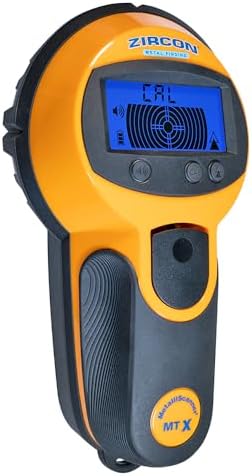
Best for: mapping a rebar grid on a slab or a wall before a run of anchors.
The MT X is Zircon’s concrete-focused metal scanner. Zircon calibrates it to locate rebar up to 4 in. (10 cm) deep. So, on paper it reaches less deep than the MT7, but it adds an integrated marker system. As a result, you can scan and mark centers in one move.
Similarly, Zircon gives the same position accuracy as the MT7: typically within 1/2 in. on #4 rebar at a minimum grid spacing of 6 in. Normal Scan handles shallow bars in tight grids, while DeepScan targets deeper pipe or rebar. In addition, the blue transflective backlit LCD stays readable in direct sun.
- Rebar depth: up to 4 in. (10 cm)
- Position accuracy: typically within 1/2 in. on #4 rebar, 6 in. minimum grid
- Modes: Normal Scan and DeepScan
- Power: three AA batteries; water and dust resistant
- Weight: 1 lb (454 g) without batteries
Pros
- Built-in marker speeds up grid layout
- Sunlight-readable display for outdoor slabs
- Pivoting handle attachment included
Cons
- Shallower rated depth than the MT7
- No numeric depth readout listed
Skip it if: your bars sit deeper than about 4 in., because the MT7 or Makita reach farther.
Best Covermeter
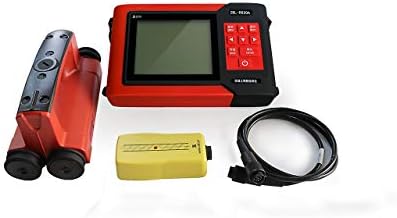
6. ZBL-R630A Concrete Rebar Locator
Best for: small testing firms and engineers who need cover readings without paying for a European pro brand.
However, the R630A is a different kind of tool from the scanners above. It is an integrated rebar detector in the covermeter style, which is the class of instrument inspectors use to read concrete cover and estimate bar size. Therefore, it suits survey work, such as checking cover on a new deck or an old balcony.
We could not open a manufacturer spec sheet for this listing, so we do not quote its range or accuracy here. Instead, ask the seller for the manual and confirm the cover range, bar diameter range and stated tolerance before you buy. Also check that the unit ships with a calibration certificate if you will report results to a client.
- Type: integrated rebar locator (covermeter class)
- Use: cover depth surveys and bar location on finished concrete
- Check before buying: cover range, bar sizes, tolerance and calibration paperwork
Pros
- Covermeter-style readings, not just a warning light
- Sold on Amazon, unlike most pro covermeters
Cons
- Specs are hard to verify from public sources
- Support and calibration service may be limited in the US
- Overkill for drilling a few anchors
Skip it if: you only want to avoid rebar while drilling, because a wall scanner is faster and simpler.
Best Compact Covermeter
7. HOJILA JW-120X Rebar Detector
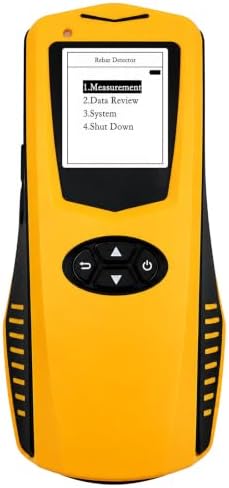
Best for: contractors who want rough cover numbers on a smaller budget.
HOJILA sells the JW-120X as a rebar detector and concrete cover meter. For example, the listing gives a 120 mm (4.7 in.) range and bar diameters from 6 to 50 mm. In other words, it covers common US sizes from about #2 to #16 bars, at least on paper.
Treat those figures as seller claims, since we could not find an independent spec sheet. Even so, the class of tool is right for cover checks. Before relying on it, test it on a slab where you know the cover, for example at a cored hole or an exposed edge.
- Type: rebar detector and cover meter
- Listed range: 120 mm (4.7 in.) cover
- Listed bar diameters: 6 to 50 mm
Pros
- Reports cover rather than only a center point
- Small, light handheld unit
Cons
- Range and tolerance are seller-stated only
- Manual quality and support vary
Skip it if: your results go into an engineering report, since an established pro covermeter is easier to defend.
How We Chose the Best Rebar Locator Picks
To be clear, we did not test these tools hands-on. Instead, we compared published specifications, manuals and owner feedback. First, we read the maker pages for each scanner, including the Bosch D-tect 120 product page, the Zircon MetalliScanner MT7 page and the Makita DWD181ZJ page.
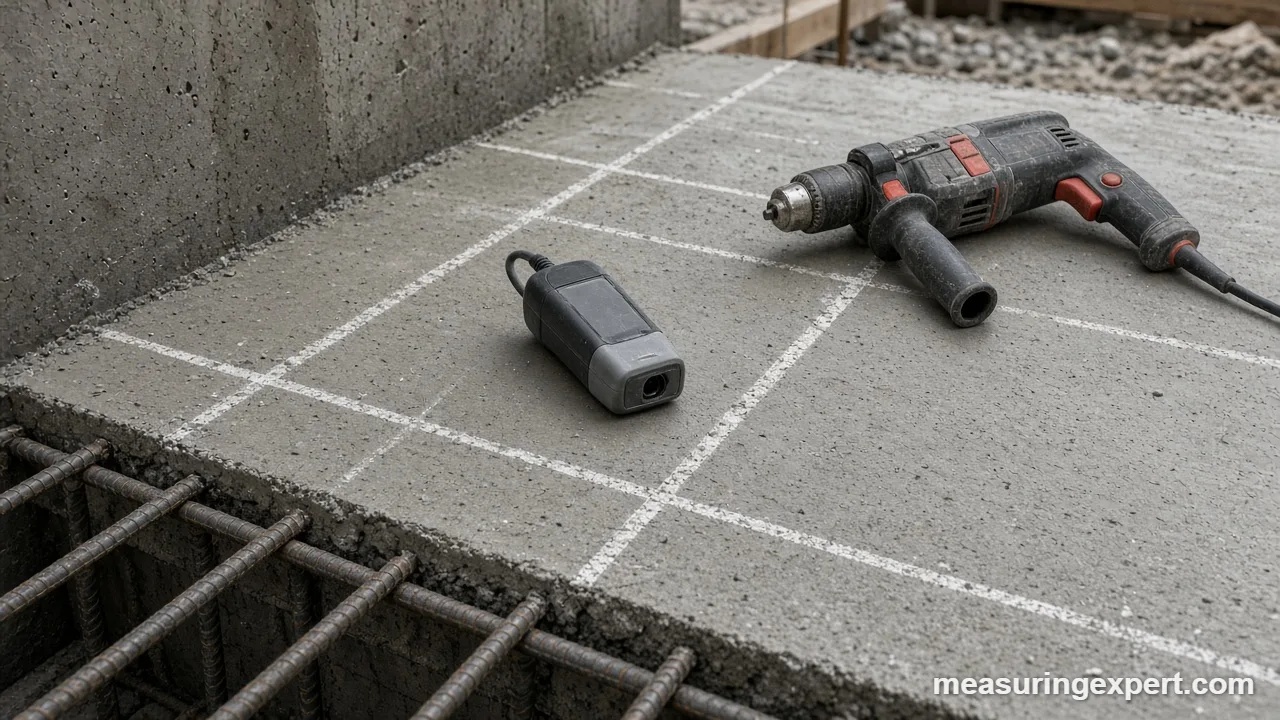
Next, we scored each tool on these points:
- Rated metal depth and whether the maker gives a tolerance.
- Position accuracy on a stated bar size and grid spacing.
- Concrete use: a concrete mode or a metal-only design, rather than a drywall stud finder.
- Extra targets such as copper, plastic pipe and live wiring.
- Brand support and clear documentation.
We also dropped tools from the old version of this page. For example, pipe and sonde locators, buried-cable tracers and magnetic locators for survey markers find utilities in soil, not rebar in a slab. Likewise, we left out the Walabot DIY 2, because Walabot says it is intended for drywall. Finally, we kept only two covermeter listings and flagged their specs as seller claims.
Covermeter vs Wall Scanner vs GPR: Which Rebar Locator Type?
Three technologies hide behind the phrase “rebar locator.” Because each measures something different, pick by the question you need answered.
| Type | How it senses | What it tells you | Typical buyer |
|---|---|---|---|
| Wall scanner (radar or multi-sensor) | Radio waves or capacitive and inductive sensors | Where an object is, roughly how deep, sometimes what type | Trades drilling anchors and cores |
| Metal scanner | Inductive metal sensing | Where steel or copper is, with a rated depth | Trades who only fear rebar and pipe |
| Covermeter | Electromagnetic (eddy current or pulse induction) | Cover depth to the bar and an estimate of bar size | Inspectors, testing labs, engineers |
| Concrete GPR | Radar pulses reflected from material changes | Rebar, tendons, conduits and voids, displayed as a scan image | Pro scanning firms before coring or cutting |
Pro covermeters vs the best rebar locator on Amazon
In practice, the instruments engineers trust for cover surveys usually come from specialist brands. For example, the Proceq Profometer line (now sold by Screening Eagle) and the Hilti Ferroscan systems are standard tools for cover mapping. Instead, they are sold through dealers and rental houses, often with calibration service and reporting software. So, if you need a cover map for a client, rent one of these or hire a firm that owns one.
When GPR beats the best rebar locator
Concrete GPR, such as the Hilti X-Scan or GSSI StructureScan systems, sees more than metal. It shows plastic conduit, voids and post-tension tendons, and it can image a second layer of steel. However, it needs training to read the scans, and wet or very young concrete weakens the signal. As a result, most owners hire GPR as a service instead of buying it.
Rebar Locator Specs Explained
Spec sheets can mislead, because the headline depth is usually a best case. So, here is how to read the numbers that matter.
- Maximum depth: the deepest point a large bar can be found under ideal conditions. Smaller bars, tight grids and wet concrete all cut that figure.
- Depth tolerance: how close the depth reading is to the truth. For instance, Zircon lists plus or minus 1 in. on the MT7. That is fine for drilling, but too coarse for cover checks.
- Position accuracy: how close the center mark is to the bar. Zircon quotes 1/2 in. on #4 rebar with at least 6 in. between bars.
- Bar size: covermeters need the bar diameter to compute depth, and some estimate it. Therefore, a wrong bar size gives a wrong cover reading.
- Ferrous vs non-ferrous: tells steel from copper or aluminum, so you know whether you are near rebar or a water line.
- Power and durability: 9V, AA or tool batteries; splash resistance helps on wet sites.
After all, concrete work runs on tight tolerances. To learn more about how allowed error works, see our guide to tolerances in construction measurement and why precision matters in construction.
Rebar Cover Depth in Inches and Millimeters
US drawings give cover in inches, while many scanners and covermeters read in millimeters. Use the converter to switch quickly, for example from a 120 mm scanner limit to inches.
For reference, one inch is exactly 25.4 mm. So, a scanner rated to 4-3/4 in. reaches about 121 mm, and one rated to 6 in. reaches about 152 mm.
How to Scan Concrete With the Best Rebar Locator
Good technique matters as much as the tool. Therefore, follow these steps for every hole.
- Check the drawings first. First, look for bar size, spacing, cover and any post-tension tendons.
- Clear the surface. Remove nails, metal tape and debris, because loose metal confuses the sensor.
- Power on away from metal. Many scanners calibrate at start-up, so hold them in the air or on bare concrete.
- Pick the right mode. Choose concrete or metal mode, and use DeepScan only when bars sit deep.
- Scan slowly in one direction. Also, keep the tool flat and move at an even speed across the area.
- Mark each center. Then scan again at 90 degrees, because rebar runs in two directions.
- Drill between the marks. In addition, leave a margin around each bar, and use a depth stop on the drill.
- Stop if you hit steel. Instead of forcing the bit, back out, re-scan and move the hole.
Do
- First, fit fresh batteries before a big scan.
- Scan in two directions and mark both.
- Then record locations on a photo or a sketch.
Don’t
- Trust a single pass over a dense grid, because bars can hide.
- Scan over metal lath, foil or wet patches and expect clean readings.
- Core a post-tensioned slab without a pro GPR scan.
Honest Limits of Any Rebar Locator
Even the best rebar locator has blind spots. First, the top mat of steel can mask a second layer, so a clean area on the screen does not prove the lower layer is clear. Second, moisture changes how radar travels, which is why fresh concrete often reads poorly. Third, inductive metal scanners struggle when bars sit closer together than the minimum spacing in the spec, such as the 6 in. grid Zircon uses for its accuracy figure.
Also, none of the handheld tools here maps plastic conduit inside a deep slab with the detail of GPR. Similarly, cheap covermeters may give a precise-looking number that is off if the bar size setting is wrong. In short, scan to reduce risk, and confirm critical work with drawings and a professional.
Best Rebar Locator FAQ
What is the best rebar locator for most people?
For most people, the best rebar locator is the Bosch D-tect 120. It uses UWB radar, has a concrete mode and lists metal detection up to 4-3/4 in., so it covers anchor drilling in slabs and walls.
Can a stud finder find rebar in concrete?
A basic stud finder cannot. However, multi-scanners with a metal mode, such as the Bosch GMS 120, can sense steel in concrete. For drywall tools, see our best stud finder guide.
How deep can the best rebar locator detect steel?
It depends on the tool. For example, in this list, maker figures run from 4 in. for the Zircon MT X to 6 in. for the Zircon MT7 and 7-1/16 in. for the Makita DWD181ZJ, under good conditions.
What is the difference between a covermeter and a rebar scanner?
A rebar scanner tells you where steel is, so you can avoid it. A covermeter measures the concrete cover over each bar and can estimate bar size, which inspectors need for reports.
Is GPR better than a rebar locator?
GPR sees more, including plastic conduit, voids and tendons, and it can show a second layer of steel. However, it costs more and needs training, so most owners hire it as a service.
Does a rebar locator work on wet concrete?
Radar-based tools often read poorly on wet or fresh concrete, because water changes the signal. Inductive metal scanners are less affected, but still scan dry, cured concrete when you can.
Can a rebar locator find post-tension cables?
Metal scanners can sense steel tendons, but they cannot tell a tendon from rebar reliably. Therefore, hire a professional GPR scan before drilling or coring any post-tensioned slab.
How accurate is the best rebar locator?
Zircon lists position accuracy within 1/2 in. on #4 rebar and depth within plus or minus 1 in. for the MT7. That is good for avoiding bars, not for formal cover checks.
Are Proceq and Hilti covermeters sold on Amazon?
Pro covermeters such as the Proceq Profometer and Hilti Ferroscan are usually sold through dealers or rented. For reports, renting one or hiring a scanning firm is often the better value.
Does the best rebar locator need calibration?
Many scanners calibrate automatically at power-on, so start them away from metal. Covermeters used for reports should also have a current calibration certificate and a check on a known bar.
For wood studs, wires and pipes in drywall, see our best stud finder picks.
Bottom Line on the Best Rebar Locator
For drilling and anchoring, the Bosch D-tect 120 is the best rebar locator for most buyers, thanks to its radar concrete mode and 4-3/4 in. metal depth. Choose the Zircon MT7 for deeper rebar, the Makita DWD181ZJ if you run 18V LXT batteries, and a covermeter or a pro rental when you must measure cover.