

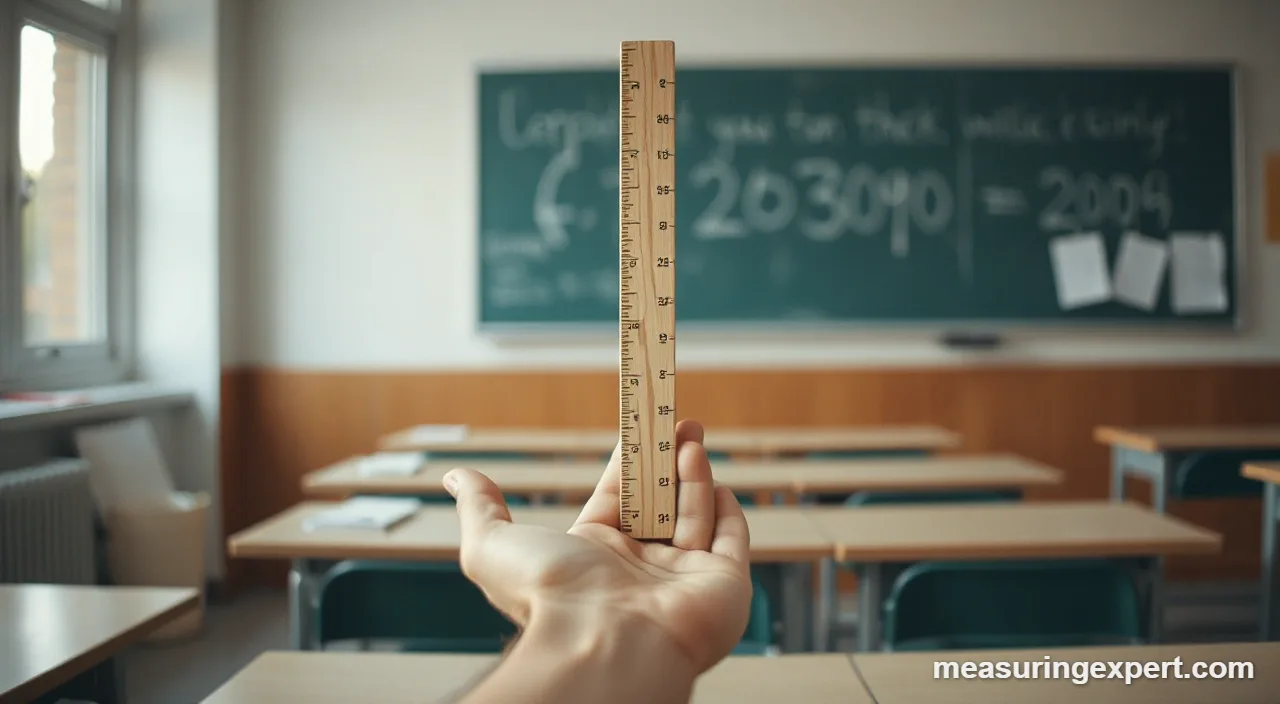
Is catching a falling stick really a direct measurement of reaction time? It feels direct, because you let go, they grab, and the number is right there on the stick. The answer is subtler, and understanding it is the reason the test works so well.
The yardstick test is a quick, low-cost way to estimate reaction time, but strictly it is an indirect measurement. What you measure directly is distance, meaning the length of stick that falls before it is caught. Physics then converts that distance into time using t = sqrt(2d / g), where g is 9.80665 m/s2. A catch at the 6 inch (15.2 cm) mark works out to about 0.18 seconds. People call the test direct in a loose sense, because the stick itself serves as the clock, with no stopwatch or electronics, and the catcher’s own response is what ends the fall.
In short: the stick turns time into length. Because a falling object speeds up at a known, steady rate, each extra inch of fall corresponds to a predictable amount of time. The longer the stick falls, the slower the response, and the relationship is a square root, not a straight line.



Black Friday week: get the picks above delivered fast with Prime
Convert the Catch Distance Between Inches and Centimeters
Enter the mark where the stick was caught in inches or centimeters. Use the table to turn that distance into seconds, since this converter handles length only.
The constant behind the math is not a rough guess. NIST lists the standard acceleration of free fall as exactly 9.80665 m/s2 in its SI conversion factor tables, and NIST also notes that the inch has been defined as exactly 25.4 millimeters since 1959 on its length units page. Those two exact values let you convert any catch distance to seconds with confidence.
Below you will find a unit converter for inches and centimeters, a reaction-time table, a full walk-through of the test, and tips for reading the results. For electronic timing instead, see our pick of the best stopwatches or the best mechanical stopwatches.
- The test measures distance directly and calculates time from it.
- Formula: t = sqrt(2d / g), with g = 9.80665 m/s2.
- A 6 in (15.2 cm) catch is about 0.18 s, and a 12 in (30.5 cm) catch is about 0.25 s.
- Equal extra distances mean smaller and smaller extra time, so the scale is not even.
- A 12 inch ruler runs out at about 0.25 s, so a yardstick or meter stick is safer.
- Average several trials and drop the anticipated ones.
- The result is a simple estimate, not a medical test.
The formula is t = sqrt(2 x d / 9.80665), with d in meters. For example, a 6 in catch is 0.1524 m, so t = sqrt(0.3048 / 9.80665) = 0.176 s.
Direct or Indirect? What the Stick Really Measures
A direct measurement compares a quantity with a standard of the same kind, such as a ruler against a length. An indirect measurement calculates the quantity from other measurements. By that definition, the yardstick test is indirect for time.
| Type | What you measure | What you get | Example |
|---|---|---|---|
| Direct | The quantity itself | The result straight from the instrument | A tape measure reading a board length |
| Indirect | A related quantity | A value calculated by a formula | Fall distance converted to reaction time |
| Direct (timer) | Time with a clock | Elapsed time on a display | A stopwatch started and stopped by hand |
That does not make the stick a poor tool. It is a clever one. The stick falls under gravity, which acts like a very steady clock, and the catch point records how long the fall lasted. You never need a timer, only a ruler and a table or formula.
The Physics: From Fall Distance to Time
An object released from rest falls a distance d = (1/2) x g x t2. Solve for time and you get t = sqrt(2d / g). The pull of gravity gives it a steady speedup of 9.80665 meters per second every second, so the stick moves slowly at first and faster as it falls.
That is why the scale is uneven. The first 5 cm of fall take about 0.10 seconds. The next 5 cm take only about 0.04 seconds. A table makes the pattern clear.
| Caught at | In inches | Reaction time |
|---|---|---|
| 5 cm | 2.0 in | 0.101 s |
| 10 cm | 3.9 in | 0.143 s |
| 15 cm | 5.9 in | 0.175 s |
| 20 cm | 7.9 in | 0.202 s |
| 25 cm | 9.8 in | 0.226 s |
| 30 cm | 11.8 in | 0.247 s |
Air resistance on a flat stick is tiny over these short falls, so it is ignored. The values assume the stick falls straight and that you read the catch at the same point you started from, not from the top of the stick.
Reaction Time vs Reflex: Two Different Things
The test is often called a measure of “reflexes,” but that is not quite correct. A reflex, such as pulling your hand from a hot surface, is automatic and passes through the spinal cord without needing a decision. Catching a stick needs your eyes to notice movement, your brain to decide, and your muscles to act. That chain is reaction time.
| Term | What happens | Typical speed | Example |
|---|---|---|---|
| Reflex | Automatic, handled in the spinal cord | Very fast, tens of milliseconds | The knee jerk in a doctor visit |
| Simple reaction time | One known cue, one known response | About 0.2 to 0.3 s for sight | Catching the dropped stick |
| Choice reaction time | Several cues, you must pick a response | Slower, often 0.4 s or more | Pressing the right button from several |
| Movement time | How long the muscle action takes after the decision | Included in the total | Closing the fingers |
The stick test captures simple reaction time to a visual cue plus the time the fingers take to close. It does not isolate the nerve signal alone.
Recommended Rulers, Tape and Timers for Reaction Tests
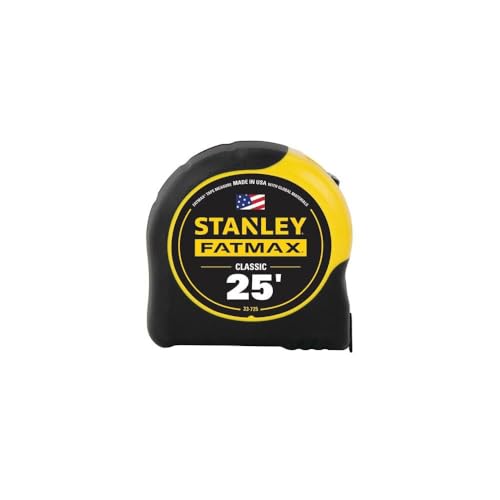
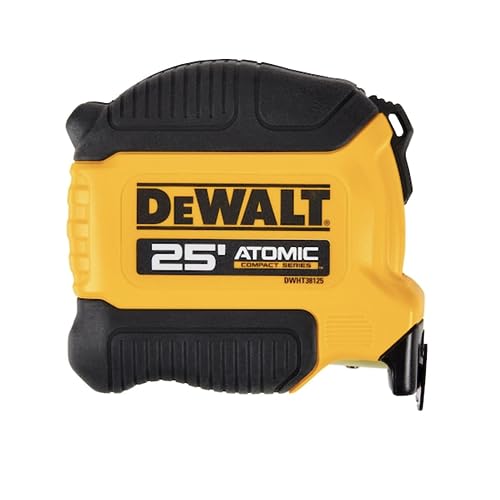
You can run the test with nothing but a stick, but a few tools make the results cleaner. A clear steel rule helps you read the catch point, a tape lets you mark a cheap stick, and a stopwatch lets you compare the stick method with a timed one. This is general measuring gear, since no product is made just for this test, and the list is based on manufacturer specs and buyer reports.
As an Amazon Associate, Measuring Expert earns from qualifying purchases.
How to Run the Test, Step by Step
You need two people and a stick, and ten minutes. Following the same routine every time keeps the numbers comparable.
- Pick two roles. One person holds the stick (the dropper) and the other catches it (the catcher). Use a yardstick or meter stick with a clear scale.
- Set the starting position. The catcher sits with the forearm resting on a table edge and the hand open past the edge. The thumb and finger are about 2 inches apart.
- Line up the zero mark. The dropper holds the stick so the zero end, or the lowest mark, sits level with the top of the catcher thumb. The stick hangs between the fingers without touching them.
- Drop without warning. The dropper lets go at a random moment, not on a count. The catcher watches the stick, not the dropper hand.
- Catch and read. The catcher pinches the stick as fast as possible. Read the mark at the top edge of the thumb and record it.
- Repeat and average. Do 5 to 10 trials, discard any that were obviously anticipated, and average the rest. Convert the average distance to time with the formula or table.
Test the catcher with eyes on the stick, then repeat while they are looking at the dropper. The difference shows how much the cue matters.
Reading the Result: What Is a Typical Number?
For most healthy young adults with a simple visual cue, a typical catch falls somewhere around 15 to 25 cm, which is roughly 0.17 to 0.23 seconds. Many classroom results land in that range, though individual numbers vary a lot from trial to trial. Treat these as rough figures, not official norms.
| Catch distance | Reaction time | Rough interpretation |
|---|---|---|
| Under 10 cm | Under 0.14 s | Very fast, or the catcher anticipated the drop |
| 10 to 15 cm | 0.14 to 0.18 s | Fast response |
| 15 to 25 cm | 0.18 to 0.23 s | Common range for a simple visual task |
| 25 to 30 cm | 0.23 to 0.25 s | Slower response |
| Over 30 cm | Over 0.25 s | Slow, tired, distracted or the stick was too short |
Several things move the number: tiredness, caffeine, practice, distraction and which hand you use. The best comparison is your own result across several days, taken under the same conditions.
Yardstick, Ruler or Meter Stick: Which to Use
The length of the stick caps the slowest reaction you can record. If the stick falls through your hand, you learn nothing except that you were slower than the limit. Here are the limits, calculated with g = 9.80665 m/s2.
| Stick | Length | Longest time it can measure | Good for |
|---|---|---|---|
| 12 inch ruler | 30.48 cm | 0.249 s | Fast responders only, since slower catches fall off the end |
| 30 cm ruler | 30 cm | 0.247 s | Same as above, in metric |
| Yardstick | 91.44 cm | 0.432 s | Most people, with room to spare |
| Meter stick | 100 cm | 0.452 s | Most people, easy metric readings |
A yardstick or meter stick has plenty of room for nearly everyone. For children or for quick demonstrations, a 12 inch ruler is fine, but expect some drops to be missed entirely. Tape a strip of paper to a plain wooden stick if you want a custom time scale, and mark it by calculation, not by trial and error.
Use a stick with a printed scale and a straight edge. A thin, flat, smooth stick falls more cleanly than a thick one that can spin.
Do and Do Not
Do
- Drop the stick at random times, not on a count.
- Use the same starting position every trial.
- Read the mark at the top of the thumb.
- Take at least 5 trials and average them.
- Rest the forearm so the hand moves only when it catches.
Do not
- Let the catcher watch the dropper hand.
- Count the first practice drop in your data.
- Use the distance of the whole stick instead of the catch point.
- Compare results between people with different sticks without checking the limit.
- Use one number to judge anyone’s health.
This is a classroom and curiosity test. It cannot diagnose a condition. If you notice a sudden or lasting slowdown in your reactions, see a doctor.
Honest Limits of the Yardstick Test
The method is easy and clear, but it is rough. The dropper’s release is not instantaneous, and a small hesitation or a slight twist changes the result. The catcher can learn the pattern of the dropper, and anticipate the release, which makes the time seem shorter than a real reaction. The reading point on a thumb is also fuzzy by a few millimeters, and at around 0.2 seconds a 5 mm error is worth about 0.0025 seconds.
The conversion assumes a clean fall from rest, a flat stick and the standard value of g. Local gravity differs from standard gravity by roughly half a percent across the Earth, which changes the time by well under a thousandth of a second here. Electronic timers and force plates give much better precision, which is why research labs use them. For learning, comparing yourself day to day and teaching how gravity links distance to time, the stick is excellent.
When to Ask a Professional
If reaction time matters for safety, such as driving, operating machinery or sports performance, a stick is not a substitute for proper testing. A sports scientist or occupational health professional can use calibrated equipment and standard protocols. If you notice unexplained slowing, clumsiness, or other changes, talk to a doctor.
This page is general educational information and is not medical advice or a clinical test.
Frequently Asked Questions
What is the yardstick test?
It is a simple reaction time test. One person drops a stick, another catches it, and the distance it fell is converted into time.
Is the yardstick test a direct measurement of reaction time?
Not strictly. It measures distance directly and calculates time from it using the physics of free fall. It acts like a clock without needing a timer.
What formula converts the catch distance to time?
t = sqrt(2d / g), with d in meters and g = 9.80665 m/s2. A 15 cm catch is sqrt(0.30 / 9.80665) = 0.175 s.
How long is the reaction time if I catch at 6 inches?
About 0.18 seconds. Six inches is 0.1524 m, and sqrt(2 x 0.1524 / 9.80665) is 0.176 s.
Is catching a stick a reflex?
No. A reflex is automatic and does not need a decision. Catching a stick needs sight, a decision and a muscle action, which is reaction time.
What is a normal result for the ruler drop test?
Many young adults catch it around 15 to 25 cm, which is about 0.17 to 0.23 seconds. Your own results vary from trial to trial.
Why does the scale on the stick look uneven?
Gravity makes the stick speed up as it falls, so equal extra distances mean less and less extra time. That is why the formula uses a square root.
Can I use a 12 inch ruler?
Yes, but it only measures up to about 0.25 seconds. Slower catches fall off the end, so a yardstick or meter stick is safer.
How many trials should I do?
Do 5 to 10 and average them, throwing out any that were obviously anticipated. A single catch is too noisy to trust.
Does the yardstick test work with my phone or a stopwatch instead?
A stopwatch started and stopped by hand adds your own reaction twice. The stick avoids that because gravity does the timing for you.
What to Take Away
The yardstick test is a neat piece of everyday physics. You measure a length, and gravity turns it into time. Strictly it is an indirect measurement, but it is a very good one, as long as you use the formula, a long enough stick and several trials.
Use it to compare yourself against yourself, to teach how free fall works, or to explore how distraction and fatigue change reaction speed. Just keep in mind that it is a simple estimate, so for anything that affects safety or health, use proper testing and professional advice.
Add ad-free music to your kitchen or workshop
1 thought on “Yardstick Reaction Test: How Fall Distance Becomes Reaction Time”