

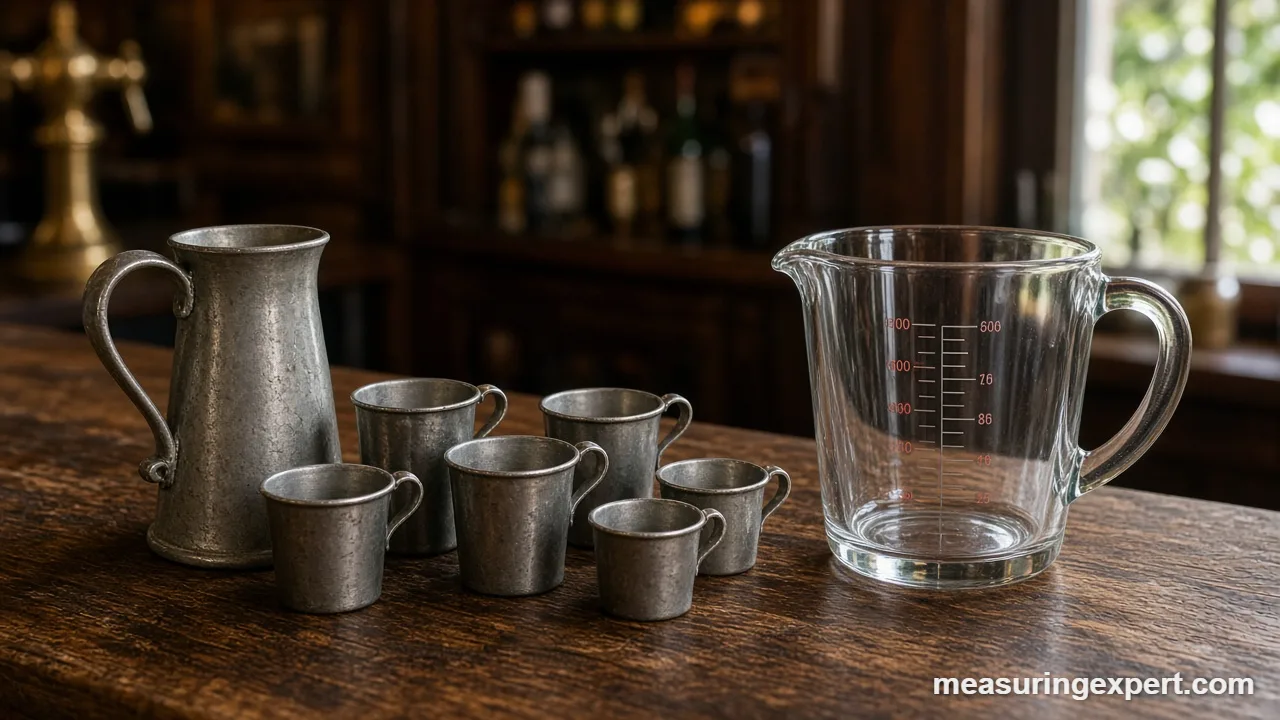
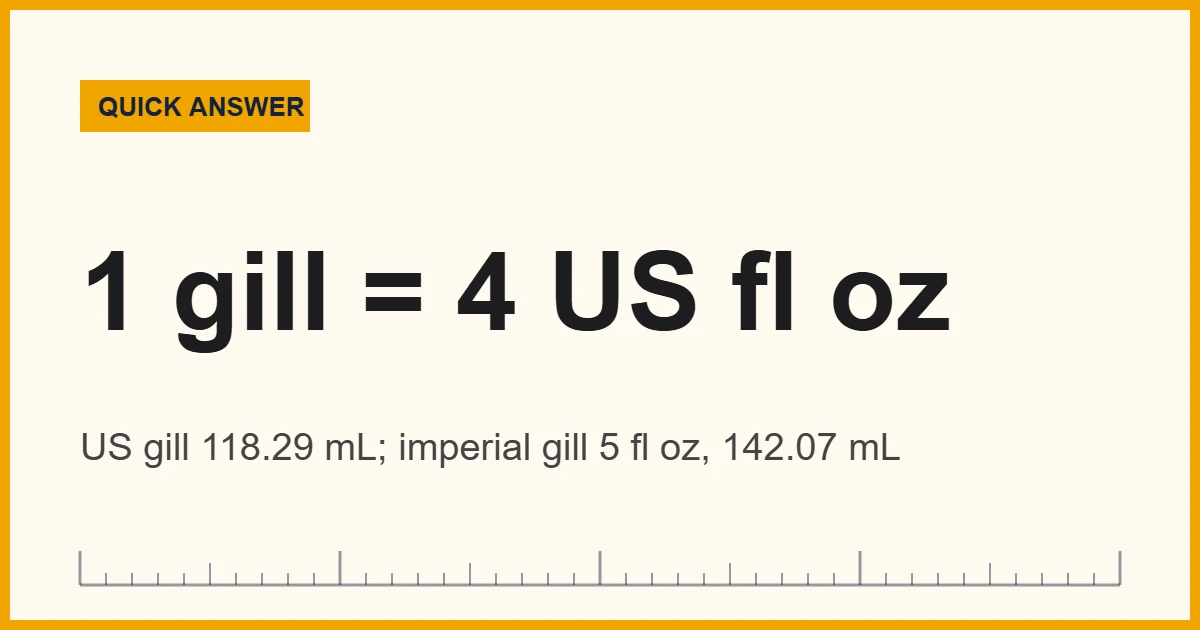
A gill measurement is a quarter of a pint. In the US, 1 gill equals 4 US fluid ounces, 1/2 cup or 8 tablespoons, which is about 118.29 mL. In Britain, however, the imperial gill equals 5 imperial fluid ounces, or about 142.07 mL. So the British gill is roughly 20 percent bigger.
Convert a Gill Measurement to Ounces, Cups and mL
The converter below has no gill setting, so start from fluid ounces instead. First, for a US gill, enter 4 US fl oz. Next, for an imperial (UK) gill, switch the unit to UK fl oz and enter 5. Then read the cups, tablespoons, milliliters and pints straight from the results.
You will mostly meet the gill in old cookbooks, antique bar guides and British pub history. For instance, recipes from the 1800s ask for “a gill of cream” or “half a gill of brandy”, but many readers have no idea how much that is. Fortunately, the answer is fixed by definition, not by guesswork.
The US National Institute of Standards and Technology (NIST) lists both versions in its SI conversion factors: the US gill is 0.1182941 liter and the Canadian and UK (imperial) gill is 0.1420653 liter. In other words, both gills are a quarter pint, but the pints themselves differ. As a result, the two gills differ too.
Below, you will therefore find a quick chart, a side-by-side comparison of the US and imperial gill, a short history, and finally practical tips for measuring one in your own kitchen.
Gill Measurement Conversion Chart
First of all, this chart covers the amounts that turn up most often in old recipes. Also, the milliliter values use the exact US and imperial fluid ounce definitions and are rounded to two decimals.
| Gills | US fl oz | US cups | US mL | Imperial fl oz | Imperial mL |
|---|---|---|---|---|---|
| 1/4 gill | 1 | 1/8 | 29.57 | 1.25 | 35.52 |
| 1/2 gill | 2 | 1/4 | 59.15 | 2.5 | 71.03 |
| 1 gill | 4 | 1/2 | 118.29 | 5 | 142.07 |
| 2 gills | 8 | 1 | 236.59 | 10 | 284.13 |
| 3 gills | 12 | 1 1/2 | 354.88 | 15 | 426.20 |
| 4 gills (1 pint) | 16 | 2 | 473.18 | 20 | 568.26 |
| 8 gills (1 quart) | 32 | 4 | 946.35 | 40 | 1,136.52 |
| 32 gills (1 gallon) | 128 | 16 | 3,785.41 | 160 | 4,546.09 |
Printable tip: the chart fits on one page, so print it and tape it inside a cabinet door if you cook from vintage books. For the bigger units in the last row, see how many mL are in a gallon.
US vs Imperial Gill Measurement
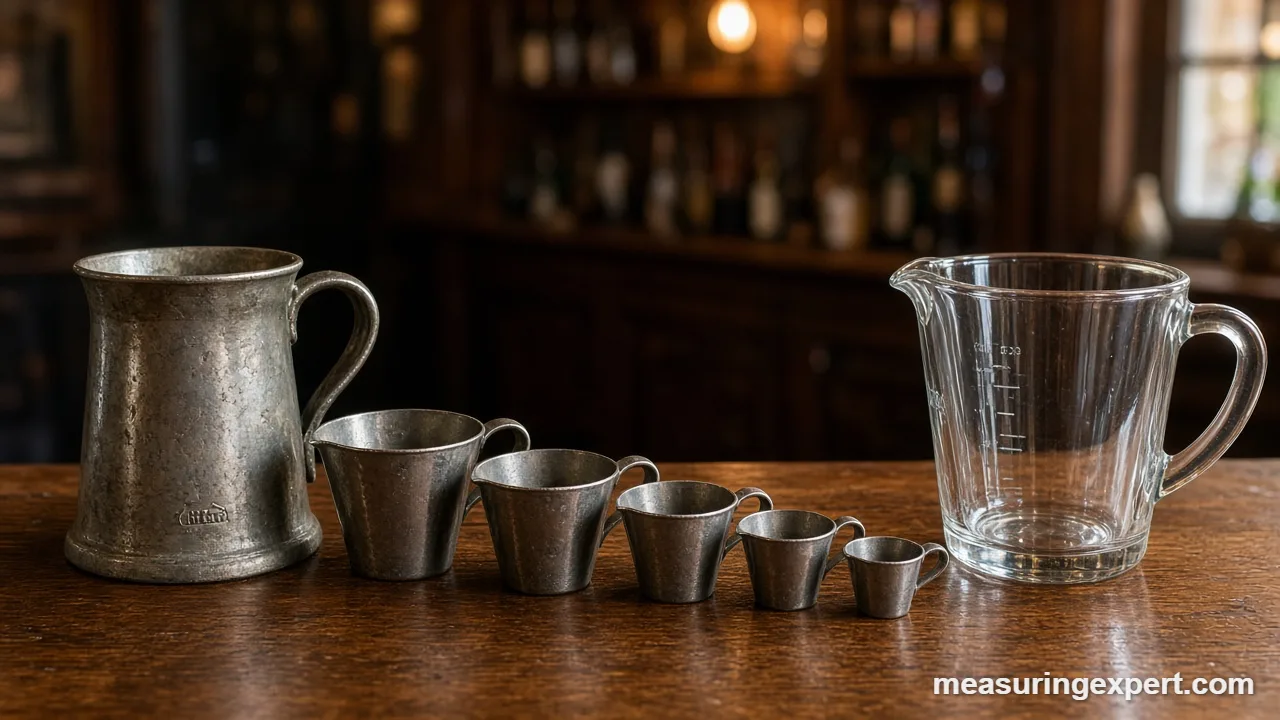
This is also where most mistakes happen. To start, both countries define the gill as 1/4 pint and 1/32 gallon. However, the US gallon is about 3.785 liters, while the imperial gallon is about 4.546 liters. Consequently, every unit built on them differs, including the fluid ounce.
| Property | US gill | Imperial (UK) gill |
|---|---|---|
| Fluid ounces | 4 US fl oz | 5 imperial fl oz |
| Milliliters | 118.29 mL | 142.07 mL |
| In US cups | 1/2 cup | about 0.60 cup |
| In US tablespoons | 8 tbsp | about 9.6 tbsp |
| In US fl oz | 4 | about 4.80 |
| Fraction of a pint | 1/4 US pint (473.18 mL) | 1/4 imperial pint (568.26 mL) |
| Fraction of a gallon | 1/32 US gallon | 1/32 imperial gallon |
For example, notice the trap in the first row. An imperial gill holds 5 fluid ounces, yet each imperial fluid ounce (28.41 mL) is slightly smaller than a US fluid ounce (29.57 mL). So the imperial gill is not 25 percent bigger, as the ounce counts suggest. Instead, it is about 20 percent bigger. Our guide to US vs UK cooking measurements explains the same split for cups and pints.
Recommended Tools for Measuring a Gill
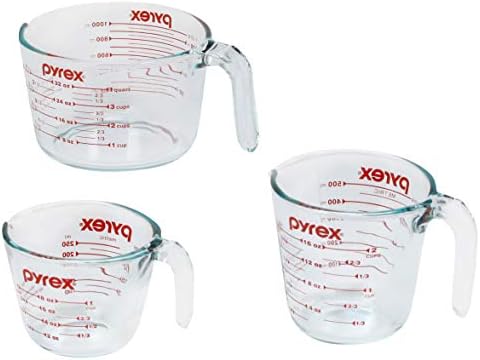
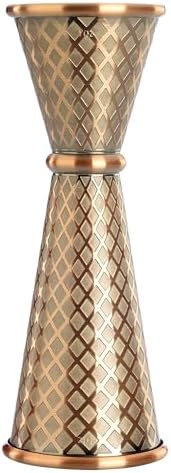
Luckily, you do not need a special gill cup. In most cases, a clear liquid measuring cup with ounce and milliliter lines does the job, because a US gill is simply the 4 oz (1/2 cup) line. For cocktails, on the other hand, a jigger with inside markings is faster. In addition, look for etched rather than printed lines, an easy-read angle or spout, and both US and metric scales.



As an Amazon Associate, Measuring Expert earns from qualifying purchases.
Where the Gill Measurement Came From
To begin with, the gill is an old English unit. According to Britannica, it dates to the 14th century, when taverns used it for single servings of wine and spirits. Later on, however, the British and American systems split. Britain redefined its gallon in 1824, while the United States kept the older wine gallon of 231 cubic inches. As a result, the two gills still differ today.
A popular story also ties the gill to the nursery rhyme “Jack and Jill”, with the “jack” and “jill” as two drinking measures. Admittedly, it makes a fun anecdote. Even so, no record proves that the rhyme was about measures, so treat it as folklore rather than fact.
Meanwhile, local habits blurred the definition. In parts of northern England, people sometimes called a half pint of beer or milk a “gill”. Similarly, a quarter pint there might be a “jack” or a “noggin”. So if a regional recipe seems to use far too much liquid, the writer may have meant a half pint.
The Gill Measurement in Pubs and Bartending
In the past, before metrication, British pubs poured spirits in fractions of a gill. For example, England and Wales commonly used a sixth of a gill, about 23.68 mL. Scotland, by contrast, often used a fifth (28.41 mL) or a quarter (35.52 mL), and Northern Ireland used a quarter. Since then, UK spirits have come in 25 mL or 35 mL measures instead.
| Old pub measure | Imperial mL | Closest modern pour |
|---|---|---|
| 1/6 gill | 23.68 mL | 25 mL |
| 1/5 gill | 28.41 mL | 25 mL or 1 US fl oz (29.57 mL) |
| 1/4 gill (a “nip”) | 35.52 mL | 35 mL |
Likewise, in US cocktail books from the late 1800s, a gill is the American 4 oz version. A drink that calls for “half a gill of whiskey”, therefore, wants about 2 US fl oz, which is the large side of a standard 1 oz x 2 oz double jigger.
How to Measure a Gill Measurement at Home
- Decide which gill the recipe uses. In general, American books mean 4 US fl oz; British, Canadian and Australian sources usually mean 5 imperial fl oz.
- Choose a clear measuring cup. For example, a 1 or 2 cup liquid measure with ounce and mL lines works best.
- Set the cup on a flat counter. Otherwise, holding it in your hand tilts the surface and skews the reading.
- Pour to the right line. Next, fill to 4 oz (118 mL) for a US gill, or to about 142 mL for an imperial gill.
- Read at eye level. Then crouch so your eye is level with the line, and read the bottom of the curved surface (the meniscus).
- Scale for fractions. Use 2 oz (59 mL) for half a US gill, or the converter above for any other amount.
Do and Don’t With Old Gill Recipes
Do
- Check where and when the recipe was written, because that decides the gill.
- Convert to milliliters first, then scale a recipe up.
- Read liquid lines at eye level, and also on a flat surface.
- Keep the chart above near your vintage cookbooks so it is always handy.
Don’t
- Assume a British gill holds 4 fluid ounces; instead, it holds 5.
- Treat 5 imperial fl oz as 5 US fl oz, since the ounces differ.
- Guess when a northern English recipe may mean a half pint.
- Rely on a drinking glass as a measure, because glass sizes vary.
Honest Limits of Converting a Gill
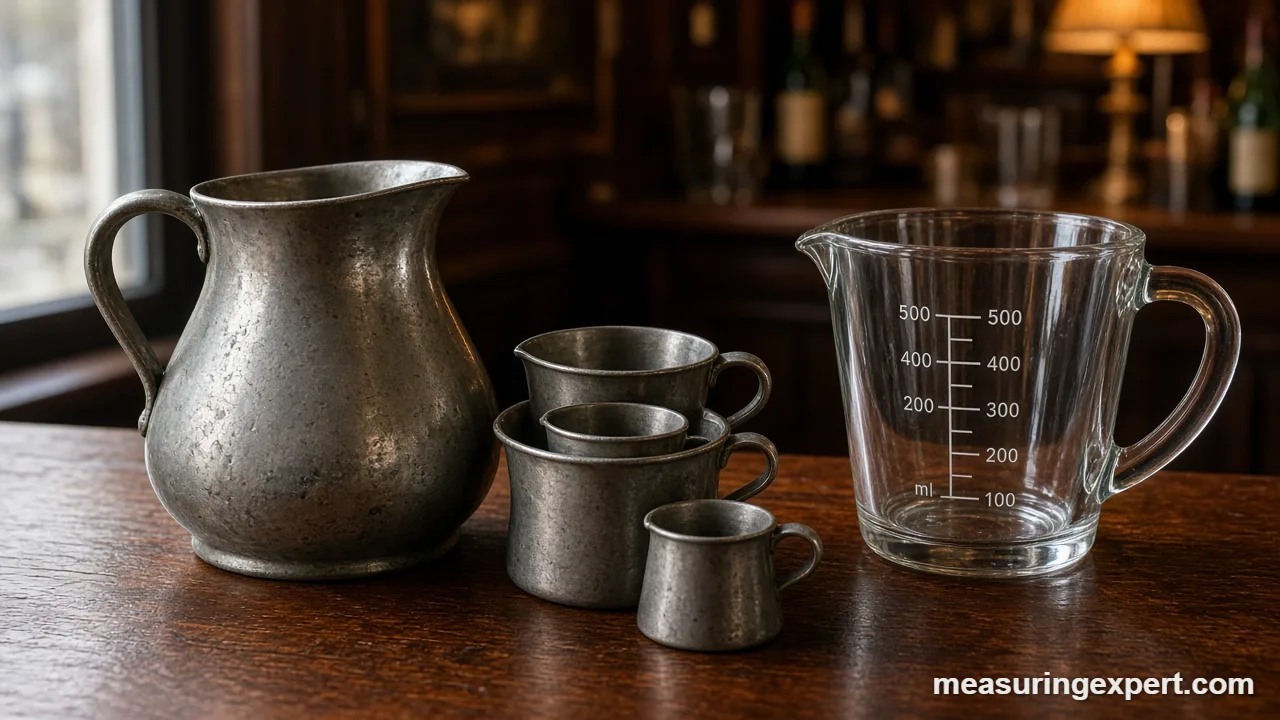
Of course, the conversions on this page are exact for the defined units. Still, old recipes were rarely that precise. For one thing, kitchen measures in the 1800s varied by maker, and writers often used “gill” loosely for a small cup or glass. Also, a gill is a volume, so its weight depends on the liquid; a gill of honey, for instance, weighs far more than a gill of water. In short, use the numbers as a reliable starting point, then adjust by taste and texture.
When Gill Measurement Accuracy Really Matters
For example, in soups and stews, a gill that is off by a tablespoon makes no real difference. Baking and drinks, however, are less forgiving. In baking, mixing up the 118 mL and 142 mL gills changes liquid by about 24 mL per gill, which can turn a dough sticky. Similarly, with spirits, the same 20 percent gap adds up fast across several drinks. Likewise, never use old household measures for liquid medicine.
Gill Measurement FAQs
What is a gill measurement?
A gill is an old unit of liquid volume equal to a quarter pint. The US gill is 4 US fl oz (118.29 mL) and the imperial gill is 5 imperial fl oz (142.07 mL).
How many ounces are in a gill?
There are 4 US fluid ounces in a US gill. An imperial gill holds 5 imperial fluid ounces, which is about 4.80 US fluid ounces.
Is a gill measurement the same as half a cup?
Yes, in the US. A US gill is exactly 1/2 US cup. However, an imperial gill is larger, about 0.60 of a US cup.
How many gills are in a pint?
In fact, there are 4 gills in a pint in both systems. Because the US and imperial pints differ, though, the gills differ too.
How many milliliters is a gill?
A US gill is about 118.29 mL. An imperial gill, by comparison, is about 142.07 mL.
How many tablespoons are in a gill?
There are exactly 8 US tablespoons in a US gill. An imperial gill, on the other hand, is about 9.6 US tablespoons.
Is the gill still used today?
Rarely. Instead, you will see it in old recipes, antique bar books and history, but modern US and UK recipes use cups, ounces and milliliters.
Why is a UK gill bigger than a US gill?
Both are a quarter pint. However, the imperial pint is about 568 mL and the US pint is about 473 mL, so the imperial gill ends up about 20 percent larger.
How do I pronounce gill as a measurement?
As a unit, it is pronounced “jill”, like the name. The fish gill is pronounced with a hard g.
How much is half a gill measurement?
Half a US gill is 2 US fl oz, or about 59.15 mL. Similarly, half an imperial gill is 2.5 imperial fl oz, or about 71.03 mL.
Gill Measurement: The Bottom Line
To sum up, a gill is a quarter pint. Specifically, in US recipes that means 4 fl oz, 1/2 cup or about 118 mL. In British and other imperial recipes, by contrast, it means 5 imperial fl oz or about 142 mL.
So first check the source, then measure with a clear cup or the converter at the top of this page. For other small liquid amounts, see how much 30 mL is in spoons and ounces.
2 thoughts on “What Is a Gill Measurement? US vs Imperial Gill Explained”