

Two skirts that are both labeled 24 inches can land in completely different places on your legs. One sits at the kneecap on a tall wearer, the other hits mid-thigh on a petite one, and a third has been measured from a different starting point altogether. That is why the only length that counts is the one taken on you.
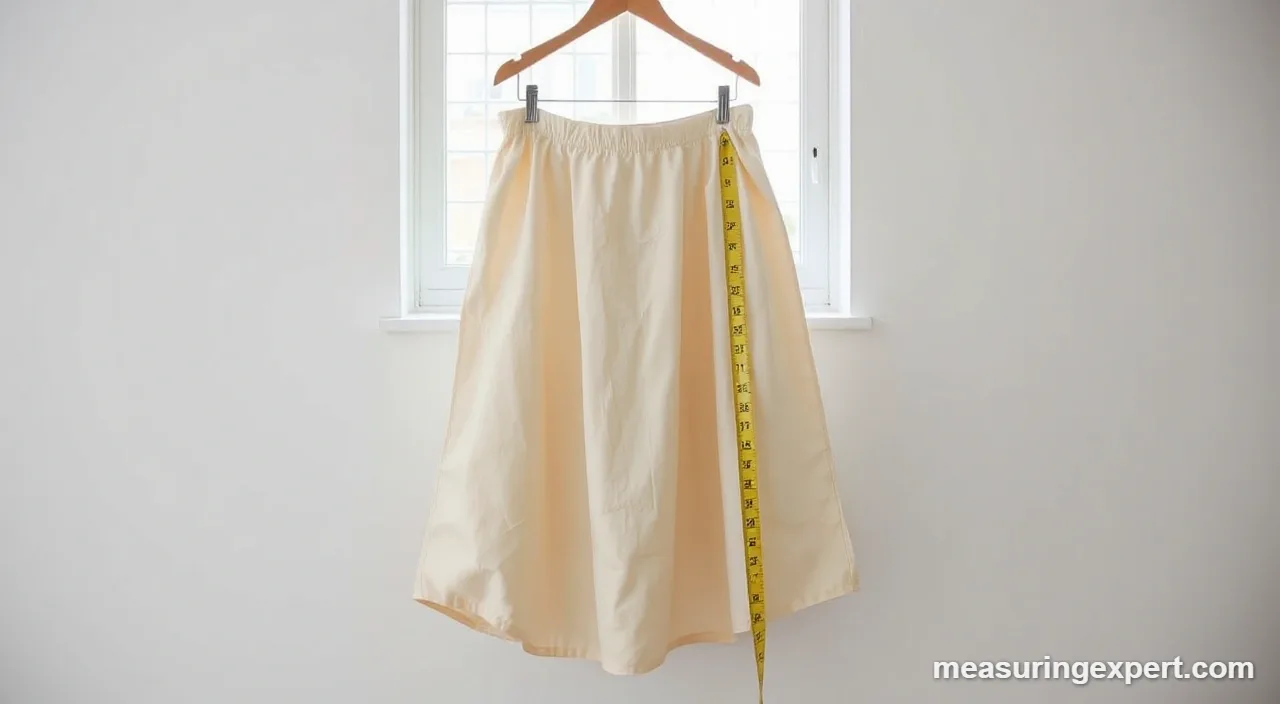
To measure skirt length on your body, tie a piece of string or elastic around your natural waist, stand straight in the shoes you plan to wear, and measure from the string down the side of your leg to the spot where you want the hem to fall. Write that number down. To measure a skirt you already own, lay it flat and measure from the top of the waistband to the bottom of the hem along the center back. Common landmarks are above the knee for a mini, the kneecap for knee length, mid-calf for tea length and about an inch above the floor for floor length.
In short: pick a start point (the natural waist), pick an end point (the hem landmark), wear the right shoes and measure along the side in a straight line.
The method matches sewing instruction from university extension services. Utah State University Extension’s skirt sewing guide tells you to measure from a string tied around the natural waistline down to the desired finished length, then add allowances for the casing and hem.






Black Friday week: get the picks above delivered fast with Prime
Skirt Length Calculator: Inches to Centimeters
Enter a waist-to-hem length in inches and read it in centimeters, or switch the units for a pattern or size chart printed in metric. The table underneath adds hem and seam allowance for sewing.
This page walks through both kinds of measuring, a table of length names, hem and seam allowances for sewing, and the points where a tailor does a better job than a tape. If you also need your waist number, our guide to measuring your waist comes first.
Formula: centimeters = inches x 2.54. A 24 in finished skirt is 24 x 2.54 = 61.0 cm, and with 1.5 in of hem and 0.625 in of seam allowance you cut fabric 26.125 in (66.4 cm) long.
Recommended Tape Measures for Skirt Length
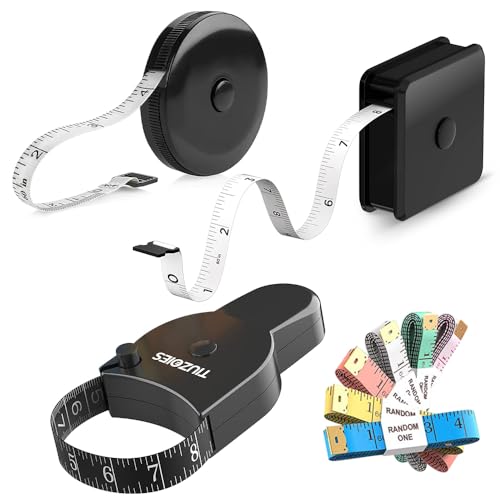
A flexible tape that lies flat against the body is the one tool you cannot skip. A rigid meter stick helps mark a hem from the floor, and a long tape suits maxi lengths. These picks come from manufacturer specs and buyer reports.
As an Amazon Associate, Measuring Expert earns from qualifying purchases.
- Start at the natural waist and measure down the side to the hem landmark you want.
- Wear the shoes you will actually wear, because heels shift floor-length results.
- For a skirt you own, measure flat from waistband top to hem along the center back.
- Tea length sits 6 to 7 in from the floor; floor length sits about 1 in above it.
- Add allowances when sewing: hem plus seam, or about 2.75 in for a simple elastic-waist style.
- Bias and flared skirts should hang overnight before you mark the hem.
- A tailor does a better job on lined, leather or formal skirts.
- How to Measure Skirt Length on Your Body
- How to Measure a Skirt You Already Own
- Skirt Length Names and Where They Land
- What Changes the Number: Shoes, Posture and Waistband
- Adding Hem and Seam Allowances When You Sew
- Choosing a Length for the Occasion
- Do and Don’t for Accurate Skirt Measurements
- Honest Limits of Skirt Length Measuring
- When to Hand It to a Tailor
- FAQs
How to Measure Skirt Length on Your Body
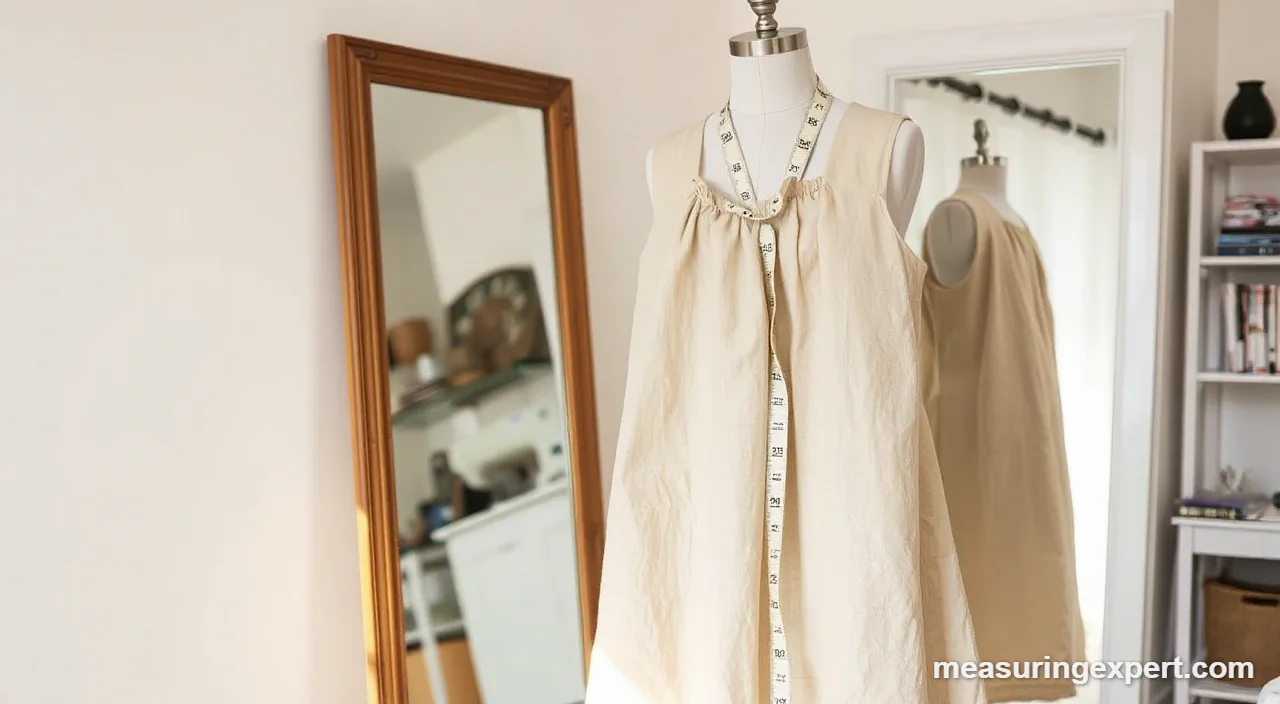
Measuring yourself gives the length that matters, because it is tied to your own legs rather than to a brand’s label. Use a soft tape and a mirror. A helper is a real advantage for the lower hem points.
- Find your natural waist. It is the narrowest part of your torso, usually just above the belly button. Bend to one side and the crease that forms is a good guide.
- Tie a string or elastic there. It marks the start point so the tape does not slide. Leave it snug but comfortable.
- Put on your shoes. Stand tall with your weight even on both feet, wearing the heel height you plan to wear with the skirt.
- Choose a hem landmark. Decide whether the hem should reach above the knee, the kneecap, mid-calf, the ankle or the floor.
- Run the tape down the side. Hold the end at the string and let the tape drop straight down the side of the leg without pulling it.
- Read and record. Note the number at the landmark, then repeat at the center back to compare. Use the shorter if they differ and the skirt is not shaped.
That number is your finished length. If you are buying a ready-made skirt, compare it with the garment length on the product page. If you are sewing, add allowances, covered below.
How to Measure a Skirt You Already Own
For a skirt on a hanger, the process is different. Lay it flat on a table, smooth out wrinkles and fasten the waistband. Measure from the top edge of the waistband to the bottom edge of the hem, along the center back. Online stores usually publish that figure, so it is the one to compare.
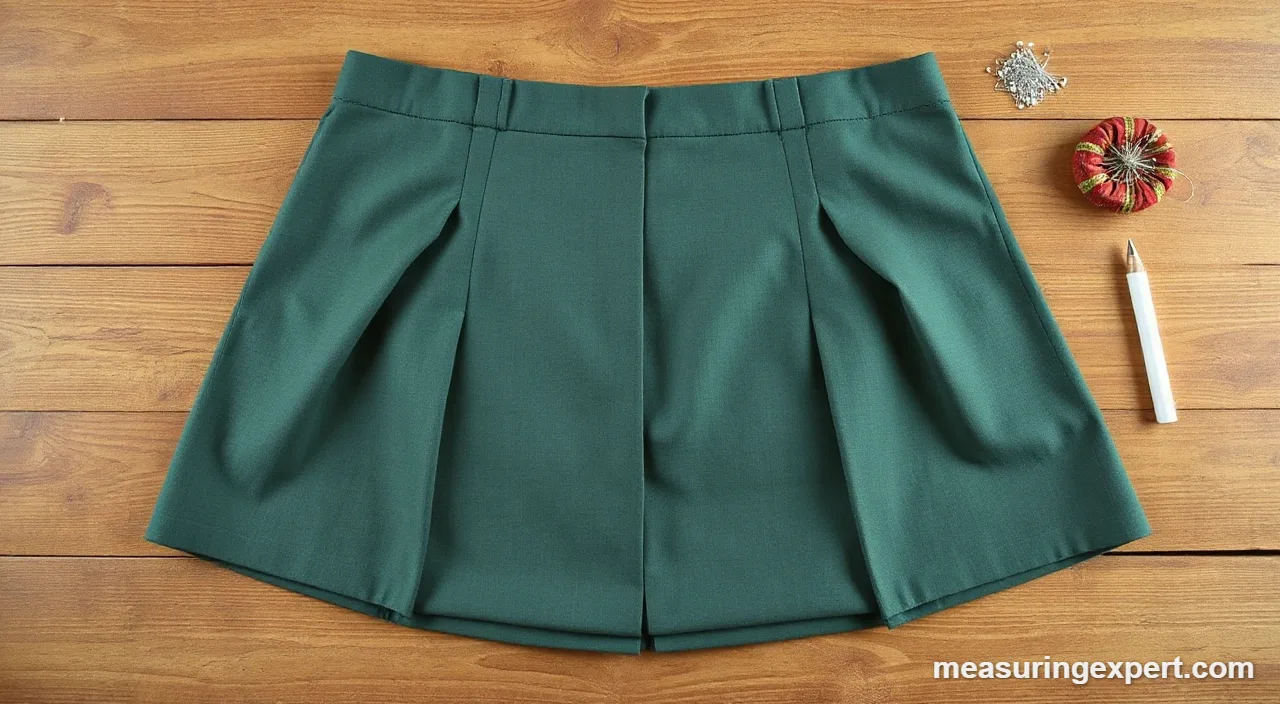
Pleated, tiered and high-low skirts need two readings, front and back. Wrap skirts and A-lines should be checked from the center of the waistband down the middle. Stretch fabrics read longer when you pull the tape against the cloth, so let the fabric lie loose. Our guide to body measurements for dress making covers the other numbers you may need when comparing to a size chart.
Skirt Length Names and Where They Land
Names are rough, and the height of the wearer decides the final landing spot. The table is based on a common sewing reference, Sew Guide’s skirt length list.
| Name | Where the hem lands | Reference |
|---|---|---|
| Mini | Above the knee | About 3 to 4 in above the knee |
| Knee length | At the kneecap | One chart gives about 24 in (61 cm) for an average wearer |
| Midi | Between the knee and mid-calf | Varies with height |
| Tea length | Mid-calf | About 6 to 7 in from the floor |
| Ballerina | Just above the floor, showing the ankle | At or a few inches above the ankle bone |
| Floor length | Grazes the ground | About 1 in above the floor with shoes on |
The 24 in knee figure shows how loose these numbers are. A skirt that lands at the kneecap on a 5 ft 10 in wearer will hit above the knee on someone 5 ft 2 in. Always use your own landmark rather than the name on the tag.
What Changes the Number: Shoes, Posture and Waistband
Three small things move your measurement more than people expect. Heels raise your body and lift a floor-length hem away from the ground, so measure in the shoes you will wear. Posture matters too: slouching shortens the distance from waist to knee by half an inch or more. Finally, the waistband position changes the start point. A high-waisted skirt begins near the natural waist, while a low-rise skirt starts a few inches lower, so the same hem landmark needs a shorter length.
Always note which waist you used. If you take a measurement for a pattern, record whether it is from the natural waist, high waist or hip line, since each pattern assumes a different start point.
Adding Hem and Seam Allowances When You Sew
Fabric length is longer than finished length. Add the hem allowance at the bottom and the seam or casing allowance at the top. Utah State University Extension’s example uses a finished length of 22 in plus a 2.75 in casing and hem allowance for an elastic-waist skirt, giving 24.75 in of fabric.
| Style | Finished length | Allowances | Cut length |
|---|---|---|---|
| Simple elastic-waist skirt | 22 in (55.9 cm) | 2.75 in casing and hem | 24.75 in (62.9 cm) |
| Waistband skirt | 24 in (61.0 cm) | 1.5 in hem plus 0.625 in seam | 26.125 in (66.4 cm) |
Treat the second row as an example: patterns differ, and heavy fabrics, curves and linings need more or less hem depth. Always follow the allowance printed on your pattern.
Choosing a Length for the Occasion
The right length depends on where you will wear the skirt. Workplaces, schools and venues set their own dress codes, so check the rules before you settle on a hem landmark. For long days on your feet, a hem that clears the knee or lands mid-calf is often easier to move in. For formal events, floor length with a hem about an inch above the floor looks neat and stays clear of your shoes.
When you are unsure, try the hem landmark on a skirt you already like, measure it, and use that number as your starting point. A well-fitting skirt is a better guide than a general rule.
Do and Don’t for Accurate Skirt Measurements
Do
- Measure over light clothing and in your usual shoes.
- Use a soft tape and keep it straight.
- Start every reading at the same natural waist mark.
- Let bias and flared skirts hang before marking the hem.
- Record whether you measured front, side or back.
Don’t
- Use a metal tape measure against the body.
- Measure in bare feet for a skirt you will wear with heels.
- Mix start points between pattern and garment.
- Pull the tape tight along stretch fabric.
- Cut fabric without adding allowances.
Garment sizes on product pages are usually flat measurements. Your body measurement and the flat garment length should be close, but they will not match exactly.
Pin carefully when marking a hem on someone. Use a helper, keep pins away from skin and stay clear of stairs or hot irons while the pinned skirt is on.
Stand on a low stool while a helper marks the hem with a rigid ruler or meter stick at the same distance from the floor all the way around.
Honest Limits of Skirt Length Measuring
Measuring is exact, fit is not. A hem that is level on a flat table can look uneven on a moving body, because hips and seat pull fabric up at the back. Fabrics also behave differently: knits stretch, linen relaxes, bias cuts drop and denim barely moves.
Expect about a quarter inch (0.6 cm) of variation between readings, and more if you are measuring yourself without help. Labels such as “mini” or “midi” are marketing words, not standards, so take them as hints. This is why a measured number plus the return policy beats any chart.
When to Hand It to a Tailor
A tailor or seamstress is worth the fee for lined skirts, leather and suede, pleats, bridal and formal wear, and any hem that needs to fall evenly on a bias or circular skirt. They check the length on you, adjust for posture and balance the hem. If you are sewing from scratch, a local sewing class or pattern shop can double-check your numbers before you cut.
For alterations on expensive garments, ask what is included and whether the original hem can be restored. This page is general guidance about measuring clothing and is not tailoring advice for a specific garment.
Frequently Asked Questions
How do you measure skirt length?
Measure from your natural waist (or the waistband top for a skirt you own) down to the hem landmark. Use a soft tape and keep it straight.
Where do you start measuring a skirt?
At the top edge of the waistband on a flat skirt, or at a string tied around your natural waist on your body.
How long is a knee-length skirt?
It should land at the kneecap. One sewing reference lists about 24 in (61 cm), but the number depends on your height.
What is the difference between midi and maxi?
A midi falls between the knee and mid-calf. A maxi usually reaches the ankle or floor.
How far from the floor should a maxi skirt be?
About 1 in (2.5 cm) above the floor when you wear your shoes, so it does not drag.
How long is a tea-length skirt?
It lands at mid-calf, about 6 to 7 in (15 to 18 cm) from the floor.
How much hem allowance should I add when sewing?
It depends on the pattern. Utah State University Extension adds 2.75 in for casing and hem on a simple elastic-waist skirt, and 1.5 in for a hem is common on a waistband skirt.
Does heel height change skirt length?
Yes. Heels lift you off the floor, so a floor-length hem needs to be measured in the shoes you will wear.
How do I convert skirt length from inches to centimeters?
Multiply inches by 2.54. A 24 in skirt is 61.0 cm.
Can I measure a skirt without a tape measure?
Yes. Use a string and mark it, then measure the string against a ruler. A tape is easier and stays accurate.
Bottom Line
Measure skirt length from the natural waist (or waistband top) to your chosen hem landmark, in the shoes you will wear, along a straight line down the side. Use named lengths as a guide and your own landmark as the answer.
If you sew, add hem and seam allowances to the finished length before you cut. If the garment is formal, lined or hard to hem, ask a tailor to check the length on you.
Listen to a free audiobook while you cook, work or wait