

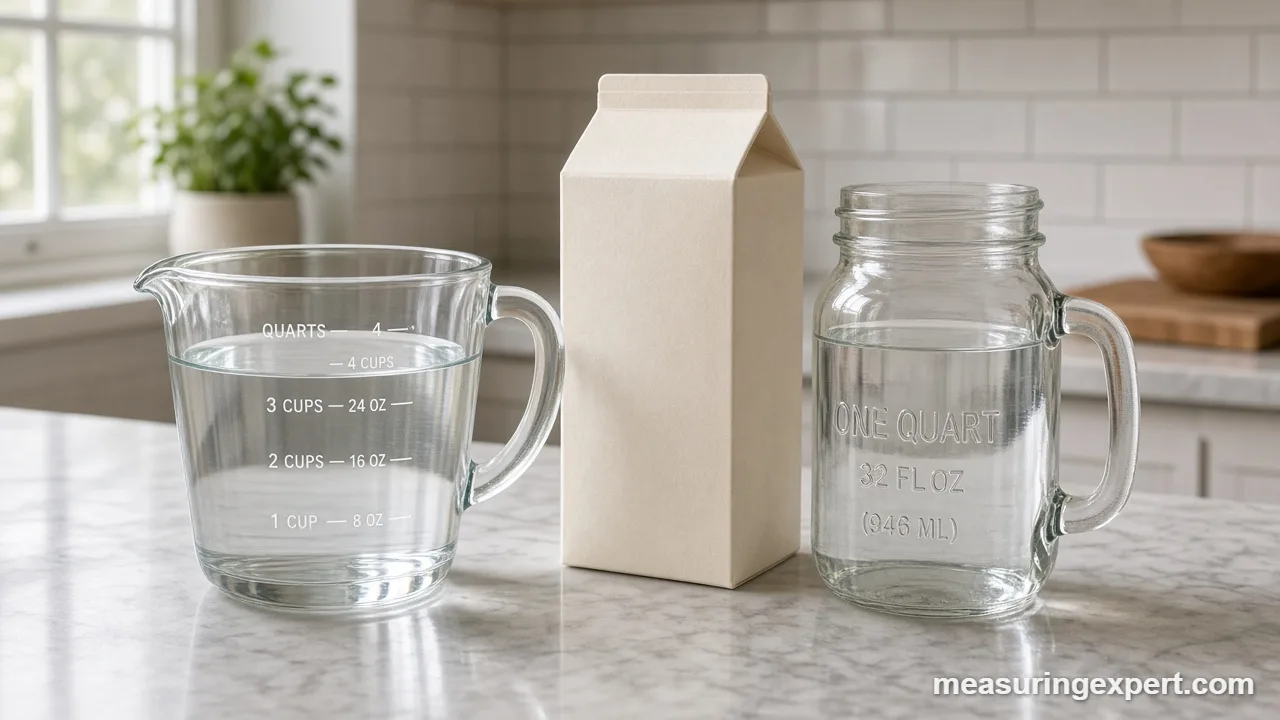
A quart measurement is one quarter of a gallon. In the US, one liquid quart equals 2 pints, 4 cups or 32 fluid ounces, which is exactly 57.75 cubic inches or about 946 mL. However, a US dry quart holds about 1.101 L, and a British imperial quart holds about 1.137 L.
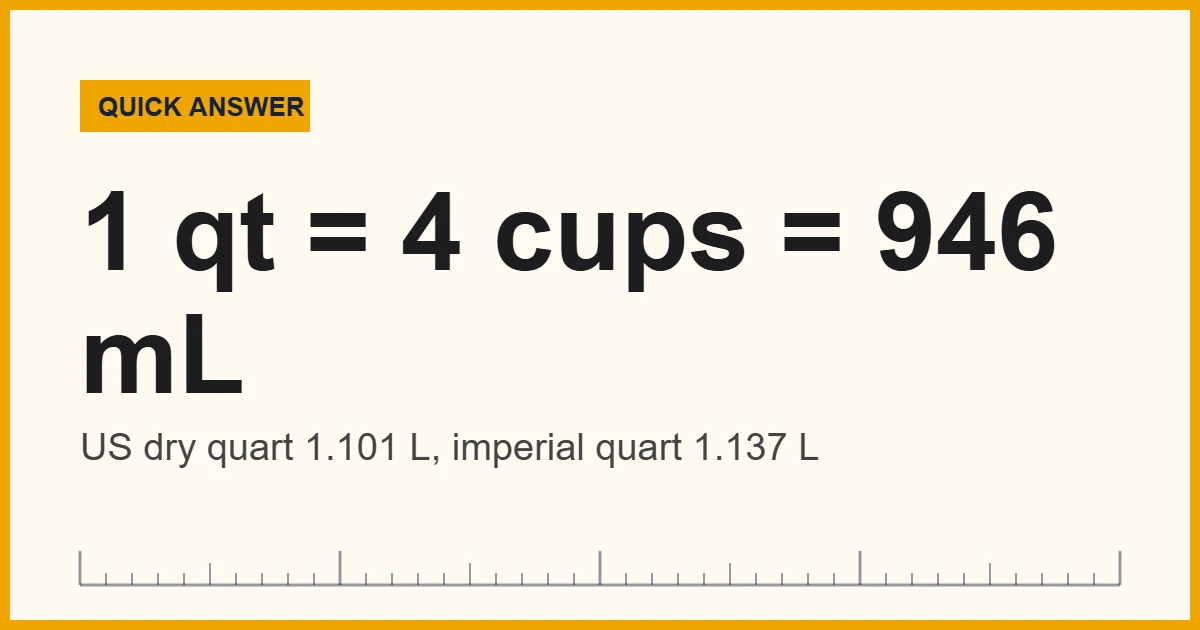
Quart Measurement Converter
Enter any number of quarts below to see the same amount in cups, pints, gallons, fluid ounces, milliliters and liters. Also, the converter uses the exact US definition of the liquid quart. In addition, it shows UK pints, so you can compare with British recipes.
The word quart comes from the Latin quartus, meaning a fourth, and that is exactly what it is: a fourth of a gallon. For example, you meet it on milk and juice cartons, motor oil bottles, deli soup containers, slow cookers, stockpots and canning jars. In addition, older recipes often call for “a quart of berries” or “a quart of stock”.
The catch, however, is that there is more than one quart. Because the US gallon and the British gallon are different sizes, their quarters differ too. On top of that, the US keeps a separate dry quart for produce. The US National Institute of Standards and Technology (NIST) lists all three in its official conversion factors: about 0.9464 L for the US liquid quart, 1.1012 L for the US dry quart and 1.1365 L for the imperial quart.
So when a label or recipe says “1 quart”, the country and the ingredient tell you which one is meant. For everyday US cooking, it is almost always the liquid quart of 32 fluid ounces.
US Liquid, US Dry and Imperial Quart Measurement Compared
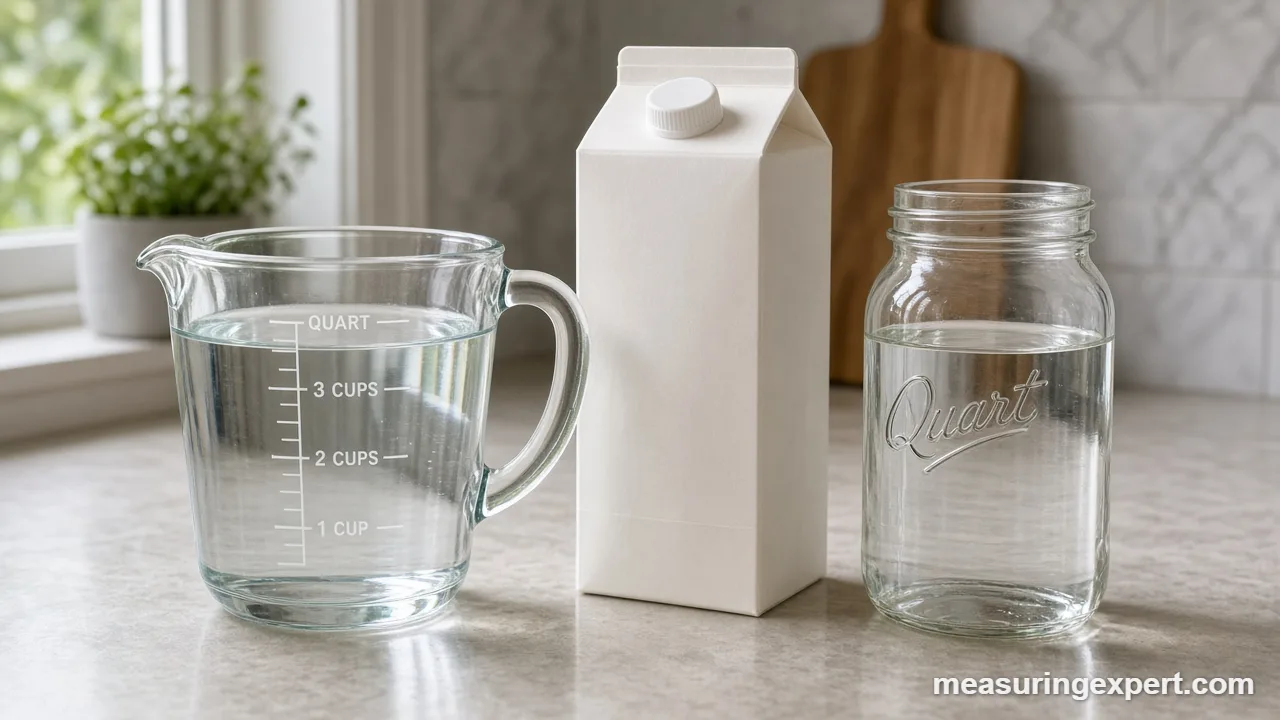
All three units are called a quart, and each is a quarter of its own gallon. Yet they are not interchangeable. First, here is how they line up.
| Quart | Exact definition | Metric value | Where you see it |
|---|---|---|---|
| US liquid quart | 1/4 US gallon = 57.75 in³ | 0.946353 L (946.35 mL) | Milk, juice, broth, oil, US recipes |
| US dry quart | 1/32 bushel = 67.2006 in³ | 1.101221 L | Berries, cherry tomatoes, farm stands |
| Imperial (UK) quart | 1/4 imperial gallon | 1.1365225 L | Older British, Irish and Canadian recipes |
In other words, an imperial quart is about 20% bigger than a US liquid quart, while a dry quart is about 16% bigger. As a result, 1 liter sits between them: it equals about 1.057 US liquid quarts but only about 0.88 imperial quarts.
The US liquid quart measurement
In short, this is the default quart in the United States. First of all, it is built from the US gallon of 231 cubic inches, so one quart is exactly 57.75 cubic inches. Since the inch is defined as exactly 2.54 cm, that works out to exactly 0.946352946 L. Inside the US system, it also breaks down neatly: 1 quart = 2 pints = 4 cups = 32 fluid ounces = 64 tablespoons.
The US dry quart measurement
By contrast, the dry quart comes from the bushel of 2,150.42 cubic inches, an old English grain measure. Eight dry quarts make a peck, and 32 make a bushel. In fact, you rarely need it in a kitchen. Still, it explains why a “quart” basket of strawberries at a farm stand holds more than a quart carton of milk.
The imperial quart measurement
Meanwhile, Britain replaced its older gallons with the imperial gallon in 1824. Today, UK law defines that gallon as exactly 4.54609 liters and the quart as one quarter of it, according to the Weights and Measures Act 1985. An imperial quart therefore holds 2 imperial pints, or 40 imperial fluid ounces. By contrast, in US fluid ounces it is about 38.43.
Quart Measurement Chart
Use this chart for common amounts. In addition, the US columns use exact definitions, and the liter values are rounded to three decimals. You can also print this page or save it as a PDF for the kitchen.
| US liquid quarts | Cups | Pints | Fluid ounces | Liters (US) | Liters (imperial qt) |
|---|---|---|---|---|---|
| 1/4 qt | 1 | 1/2 | 8 | 0.237 | 0.284 |
| 1/2 qt | 2 | 1 | 16 | 0.473 | 0.568 |
| 1 qt | 4 | 2 | 32 | 0.946 | 1.137 |
| 1 1/2 qt | 6 | 3 | 48 | 1.420 | 1.705 |
| 2 qt | 8 | 4 | 64 | 1.893 | 2.273 |
| 3 qt | 12 | 6 | 96 | 2.839 | 3.410 |
| 4 qt (1 gal) | 16 | 8 | 128 | 3.785 | 4.546 |
| 6 qt | 24 | 12 | 192 | 5.678 | 6.819 |
| 8 qt | 32 | 16 | 256 | 7.571 | 9.092 |
| 10 qt | 40 | 20 | 320 | 9.464 | 11.365 |
For a closer look at one common amount, see how much 2 quarts is in cups, ounces and liters. Likewise, if you are scaling up to jugs and pails, our guide to how many quarts are in a gallon covers the full gallon breakdown.
Where the Quart Came From
At first, medieval England used several gallons at once, one for wine, one for ale and one for grain. Each had its own quarter, so each had its own quart. Later, in 1707, the wine gallon was fixed at 231 cubic inches, and the American colonies used it. Then, after independence, the United States kept that wine gallon for liquids and the Winchester bushel for dry goods.
Britain, meanwhile, scrapped its old gallons in 1824 and introduced the larger imperial gallon. As a result, the US and UK quarts split apart. Today, by comparison, the US gallon is tied to the metric system through the inch, while the UK defines its gallon directly in liters. Finally, most of the world now measures in liters, so the quart survives mainly in the US and in older recipes.
Recommended Tools for Quart Measurement
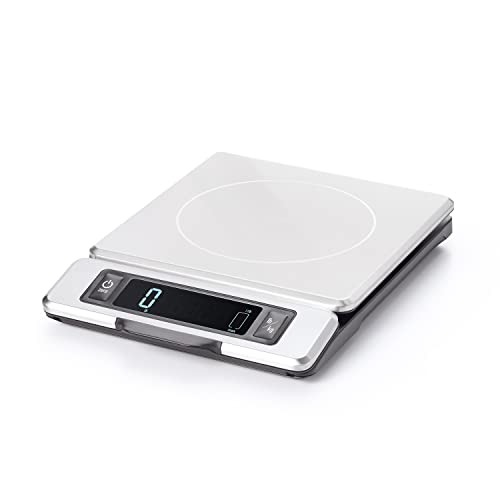
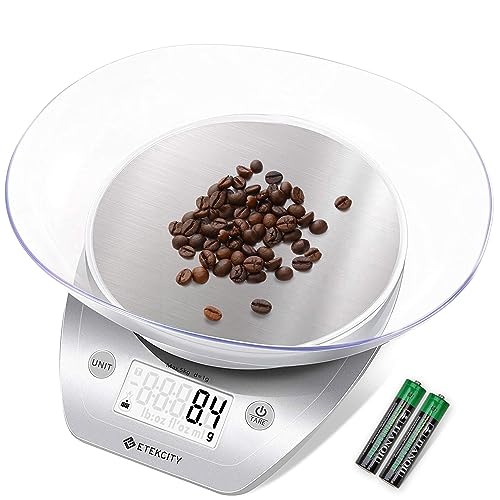
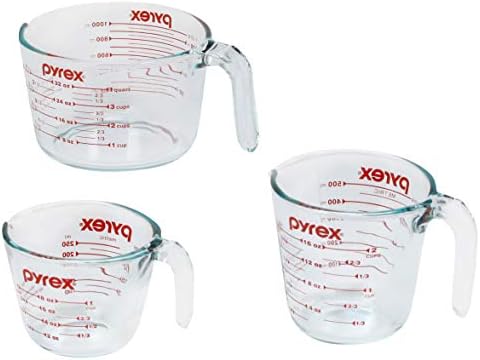
First, a 4-cup liquid measuring cup is the easiest way to measure a quart at home, because its top line is exactly one quart. In addition, a larger graduated pitcher helps with stocks and brines, and a digital scale is useful when a recipe gives weights instead. Finally, these picks come from established kitchen brands, based on manufacturer specs and buyer reports.


As an Amazon Associate, Measuring Expert earns from qualifying purchases.
How to Check a Quart Measurement at Home
- Pick a clear liquid measuring cup. Use a 4-cup (1-quart) cup, or a larger pitcher with a quart line. Dry cups, by contrast, are not designed for liquids.
- Set it on a flat counter. This matters because holding the cup in your hand tilts the surface and skews the reading.
- Pour to just below the line. Then add the last bit slowly, because it is easier to top up than to pour off.
- Read at eye level. Bend down until the line is level with your eyes, and then read the bottom of the curved surface (the meniscus).
- Use smaller cups if you need to. If you only have a 1-cup measure, fill it 4 times, or use the converter above to check other amounts.
- For produce, fill loosely. For example, farm stands fill a dry quart of berries heaped to the rim of the basket, not packed down.
Quart Measurement vs Weight
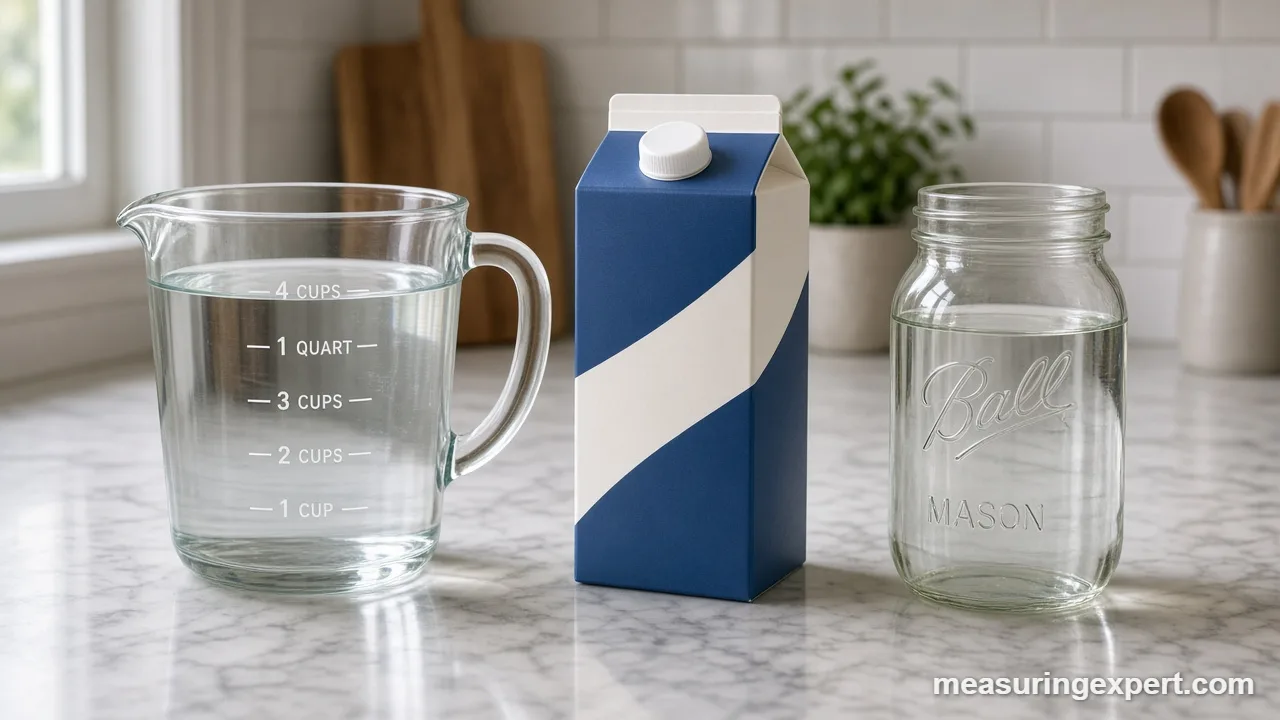
A quart measures volume, not weight. Therefore, how heavy a quart is depends on what is inside it. For example, a US quart of water weighs about 2.08 pounds (about 0.94 kg) at room temperature. By contrast, a quart of flour weighs far less, and a quart of honey weighs far more.
| People often confuse | What it really is |
|---|---|
| Fluid ounce (fl oz) | Volume: 32 US fl oz make 1 US liquid quart |
| Ounce (oz) | Weight: about 28.35 g; a quart’s weight in ounces depends on the ingredient |
| Quart vs liter | Close but not equal: 1 US quart is about 946 mL, so a liter is about 5.7% more |
| US pint vs UK pint | About 473 mL vs about 568 mL, which is why the quarts differ |
For more on how cups, pints and quarts relate, see how many pints are in a gallon.
Do and Don’t for Quart Measurement
Do
- Check whether a recipe is American or British, because the quarts differ.
- Read liquid lines at eye level, and also keep the cup on a flat surface.
- Use a liquid cup with a spout for liquids so you can pour cleanly.
- Weigh flour and sugar instead when a recipe gives grams.
- Remember that 1 US quart is 32 fl oz.
Don’t
- Treat a liter and a quart as the same in baking, since they differ by about 5.7%.
- Swap a dry quart basket for a liquid quart.
- Pack flour into a quart measure, because packing adds weight.
- Assume a UK “quart” is 32 US fl oz.
- Guess motor oil amounts by eye; instead, check the dipstick.
Honest Limits of a Quart Measurement
To be clear, the values on this page describe definitions. However, real containers are less exact. For instance, the printed lines on measuring cups have small tolerances, and a cup read from above can look full when it is slightly short. Also, liquids expand a little as they warm, so a quart of hot stock contains slightly less liquid by weight than a quart of cold stock. Even so, none of this matters for everyday cooking. For baking, canning or lab work, however, weighing is more reliable than reading a line.
When Accuracy Really Matters
In general, most soups and drinks forgive a small error. Still, a few jobs deserve care:
- Canning and pickling. Brine strength depends on the ratio of salt or vinegar to water, so measure both carefully.
- Engine oil. For instance, car manuals give oil capacity in quarts and liters. Add a little less than the stated amount, then check the dipstick before topping up.
- Baby formula and medicine. Always follow the scoop or dosing device that comes with the product, rather than a kitchen estimate.
Frequently Asked Questions
What is a quart measurement?
It is a unit of volume equal to one quarter of a gallon. In the US, a liquid quart holds 32 fluid ounces, or about 946 mL.
How many cups are in a quart?
There are 4 US cups in 1 US liquid quart. In other words, each cup holds 8 fluid ounces.
How many ounces are in a quart?
One US liquid quart holds 32 US fluid ounces. By comparison, an imperial quart holds 40 imperial fluid ounces, which is about 38.4 US fluid ounces.
Is a quart bigger than a liter?
No, a US liquid quart is slightly smaller. One liter equals about 1.057 US quarts. However, an imperial quart is bigger than a liter, at about 1.137 L.
What is the difference between a dry and liquid quart measurement?
The US dry quart is about 1.101 L, while the US liquid quart is about 0.946 L. In practice, people use dry quarts mainly for berries and other produce.
Is a UK quart measurement the same as a US one?
No. The imperial quart is about 1.137 L, so it is roughly 20% larger than the US liquid quart.
How many pints are in a quart?
There are 2 pints in a quart in both the US and UK systems. Because the pints differ in size, so do the quarts.
How many quarts are in a gallon?
There are 4 quarts in a gallon. That holds for US liquid, US dry and imperial gallons alike.
How much does a quart of water weigh?
About 2.08 pounds, or about 0.94 kg, at room temperature. Other liquids, however, weigh more or less depending on their density.
What is the abbreviation for quart?
The usual abbreviation is qt. You may also see qt (US), liq qt or dry qt when the type matters.
Quart Measurement: The Bottom Line
To sum up, a quart is a quarter of a gallon. In the US, for example, that means 32 fluid ounces, 4 cups or about 946 mL. Meanwhile, the dry quart (about 1.101 L) and the imperial quart (about 1.137 L) are both larger, so always check where a recipe or label comes from.
Next time you need a number, use the converter at the top of this page. After that, measure with a clear liquid cup at eye level, and you will get the right amount every time.