

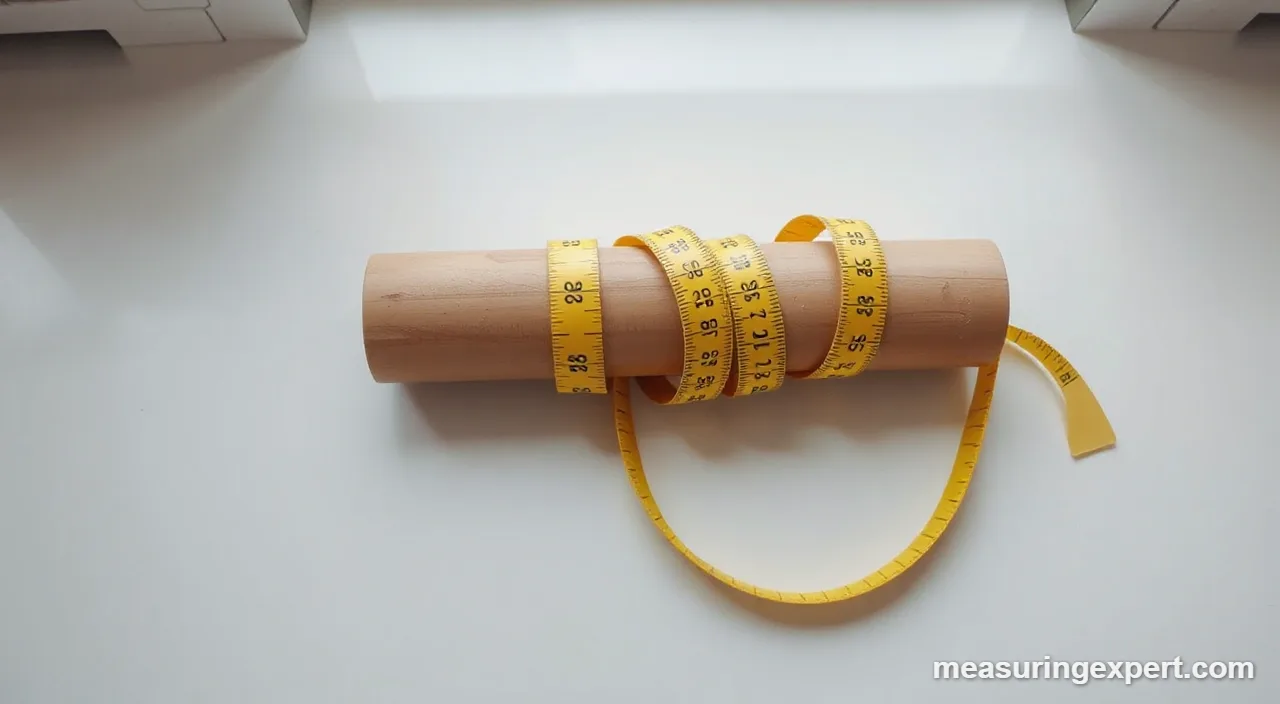
Ask ten people how to measure girth and you get ten different answers, because the word covers a waist, a tree, a pipe and a parcel. The most common mistake is the same in all of them: a tape that slopes, twists or digs in, which adds or removes a centimeter or two without anyone noticing. This guide explains one method that works for every case, then shows where to place the tape for each body part and object.
To measure girth, wrap a flexible tape once around the part you want, keep it level and flat with no twists, pull it snug without squeezing, and read the number where the end meets the zero. Girth is simply circumference, the distance around, so a 94 cm reading equals 37.0 inches and a 30 cm girth means a diameter of about 9.5 cm. For body measurements, stand relaxed, breathe normally, wear thin clothing, and take three readings to average. A rigid ruler can only measure width, and it never gives girth.
Girth converter
Enter the reading from your tape and switch between centimeters, inches, millimeters and feet. It is handy when your tape is in one unit and the size chart or form wants another.
Tools for measuring girth
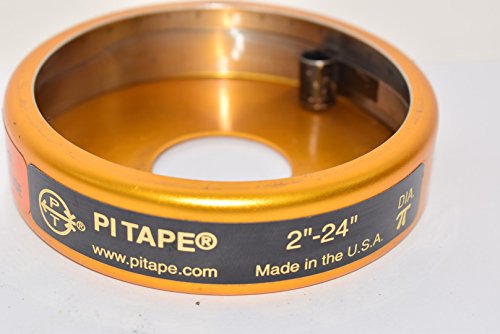
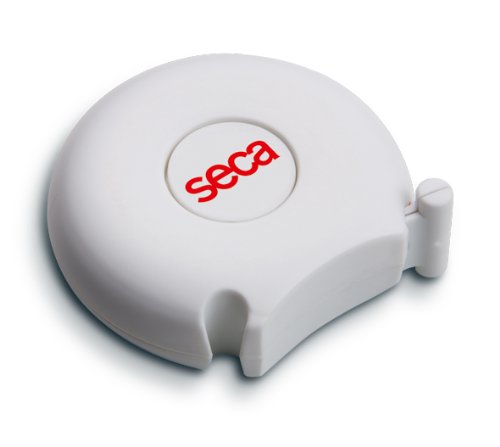
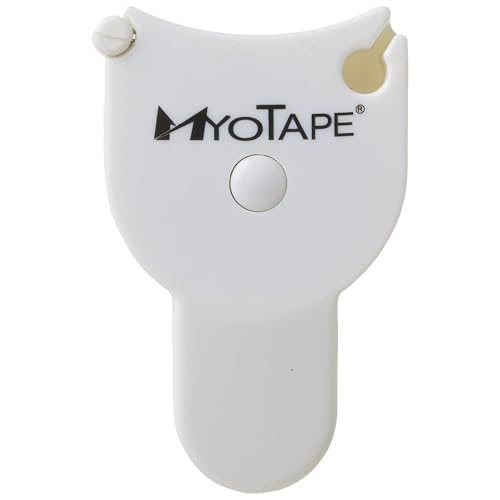
A tape is all most jobs need, but the right kind helps. These picks are based on manufacturer specs and buyer reports, and they range from a plain sewing tape to a locking body tape, a smart tape that sends readings to an app, a pi tape for round objects and a skinfold caliper for body fat work.

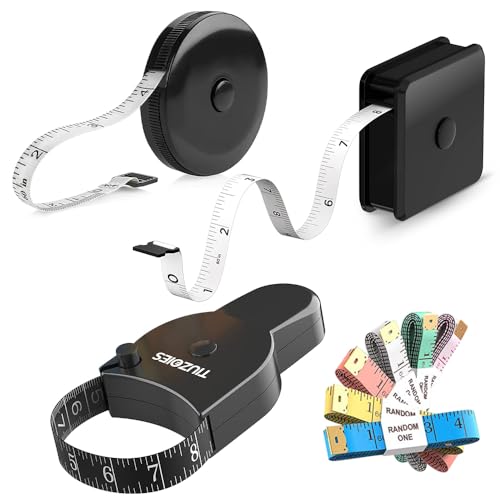
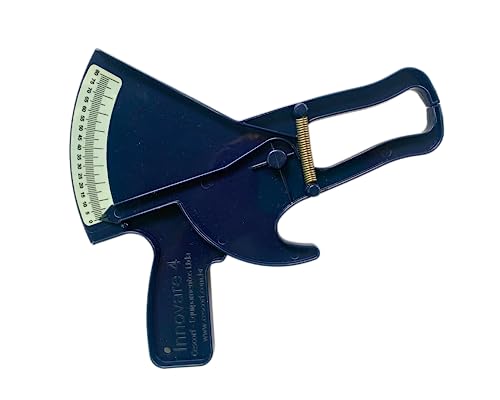
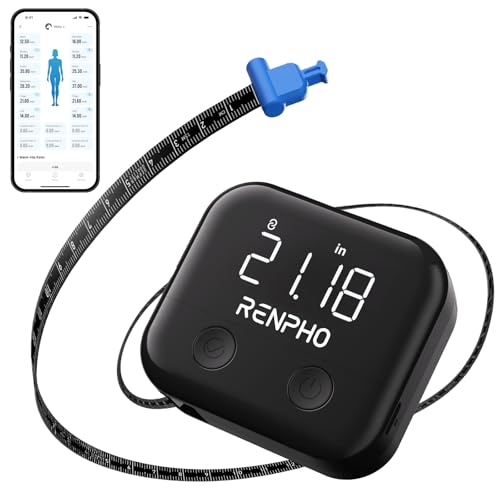
Black Friday week: get the picks above delivered fast with Prime
As an Amazon Associate, Measuring Expert earns from qualifying purchases.
For a closer comparison of tapes, see the best body measuring tapes for fitness tracking and the best body fat calipers.
Key takeaways
- Girth is circumference: the distance once around a part or object.
- Keep the tape level, flat and snug. It should not slope, twist or leave a dent.
- Take three readings and average them. Use the same time of day and the same spot.
- Divide girth by 3.14159 to get diameter, and divide centimeters by 2.54 to get inches.
- A waist over 35 inches (women) or 40 inches (men) is a screening flag, not a diagnosis.
- For packages, carriers use 2 x (width + height) of the two smaller sides.
What Girth Means and Where It Is Used
Girth is a distance around something. A tailor calls it a measurement, a forester calls it circumference at breast height, a rider calls it the strap under a horse, and a shipper calls it part of a size limit. The idea is the same each time: you are measuring a closed loop, so the tool has to be flexible and it has to meet itself.
For a circle, girth and circumference are identical, and they link to diameter through pi. The guide on how to measure the circumference of a circle covers the formula and the string method in more detail. For a body part the shape is not a perfect circle, so only a tape that hugs the surface gives a true number.
Girth shows up in sizing clothes and gloves, tracking fitness progress, checking children’s growth, choosing pipe insulation, estimating tree size, and working out courier charges. In every one of those jobs, the measurement is only useful if it can be repeated, so the habits in the next section matter more than the price of the tape.
How to Measure Girth Step by Step
- Pick the exact spot. Decide the line first, for example the narrowest part of the waist or the widest part of the hips, and mark it with a pen or a bit of tape when you can.
- Get into position. Stand tall, feet together, arms relaxed, and breathe out normally. Remove bulky clothing, since a sweater can add 2 cm.
- Wrap the tape level. Pass it once around so it stays parallel to the floor all the way round. A mirror or a helper makes this easy.
- Make it snug, not tight. Pull until the tape lies flat. It should not slip, and it should not dent the skin.
- Read at the overlap. Look at the number where the end of the tape meets the zero end, at eye level, and write it down at once.
- Repeat three times. Average the readings. If they differ by more than 1 cm, take them again.
Tip Measure at the same time of day, on the same side, with the same tape. Changes of a centimeter or two between sessions are often the tape, not you.
Do
- Keep the tape level with the floor.
- Measure bare skin or thin clothing.
- Read the tape at eye level.
- Log the number and the date.
Don’t
- Pull so hard the skin bulges.
- Let the tape twist or ride up at the back.
- Hold your breath or suck in.
- Switch tapes between sessions.
Where to Place the Tape on Each Body Part
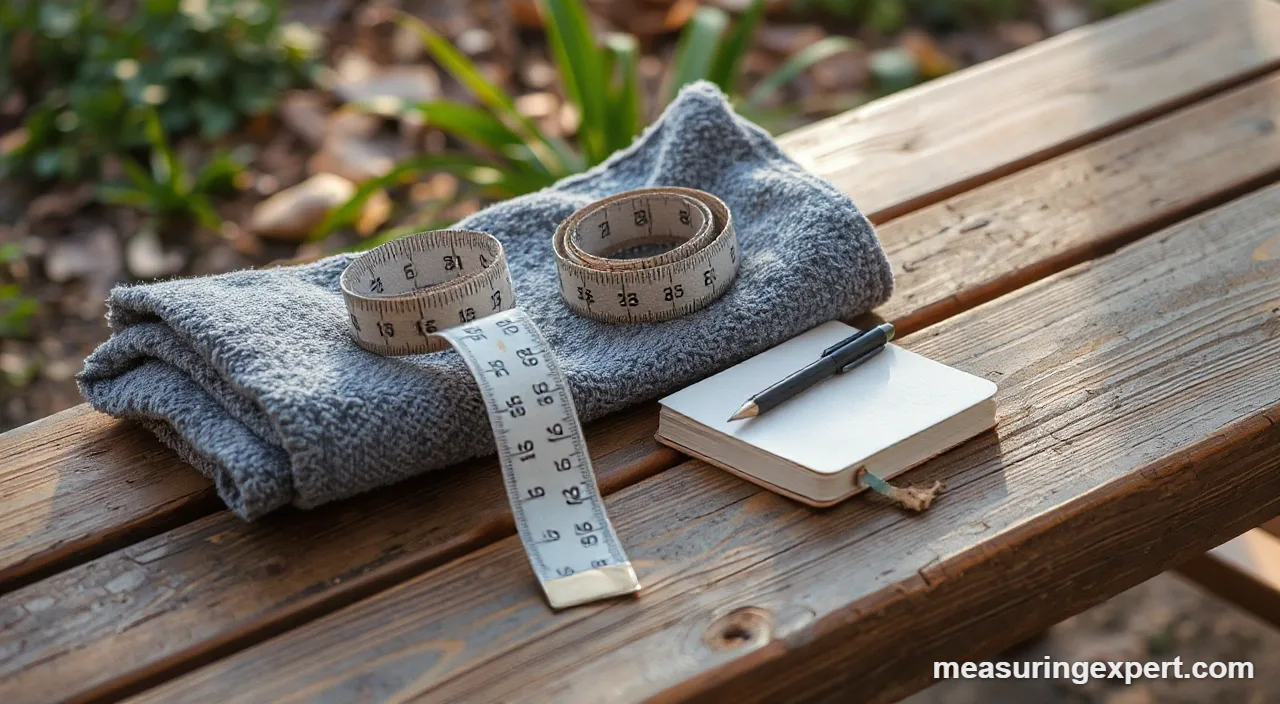
Placement matters as much as technique. The table below gives the common landmark for each measurement. Whichever you choose, use the same one each time.
| Body part | Where to place the tape | Stand or position |
|---|---|---|
| Waist | Just above the hip bones, level all the way round | Standing, after a normal breath out |
| Hips | Widest part of the buttocks, feet together | Standing, side view in a mirror |
| Chest | Under the armpits, across the fullest part of the chest | Standing, arms relaxed, normal breath |
| Upper arm | Midway between the shoulder tip and the elbow | Arm relaxed at the side |
| Thigh | Just below the fold of the buttock, or midway to the knee | Standing, weight evenly on both feet |
| Calf | Widest part of the lower leg | Standing, weight evenly on both feet |
| Neck | Just below the Adam’s apple, tape level at the front | Head level, looking forward |
| Wrist | Just above the wrist bone | Hand relaxed and open |
Note Some guidelines place the waist tape at the midpoint between the lowest rib and the top of the hip bone, while others use the line above the hip bones. Both are valid, but the numbers are not interchangeable, so pick one and stay with it.
If you want one tape that you can use with one hand, a locking body tape is easier than a loose sewing tape. If you also want to estimate body fat, a skinfold caliper reads thickness rather than girth, and the two together give a fuller picture of progress.
Waist Girth and Health Benchmarks
Waist girth is the one body measurement that health agencies discuss most. The US National Heart, Lung, and Blood Institute explains that you should measure around your middle just above the hip bones, after breathing out, and notes a higher risk of heart disease and type 2 diabetes above these values:
| Group | Waist above | In centimeters |
|---|---|---|
| Women | 35 inches | 88.9 cm |
| Men | 40 inches | 101.6 cm |
Warning These numbers are screening hints for adults, not a diagnosis, and they do not fit everyone, including children, pregnant women and people with some body shapes. This page is general education only. If your waist is above the line, or you have questions about weight or heart health, talk to a doctor.
Girth to Diameter and Radius
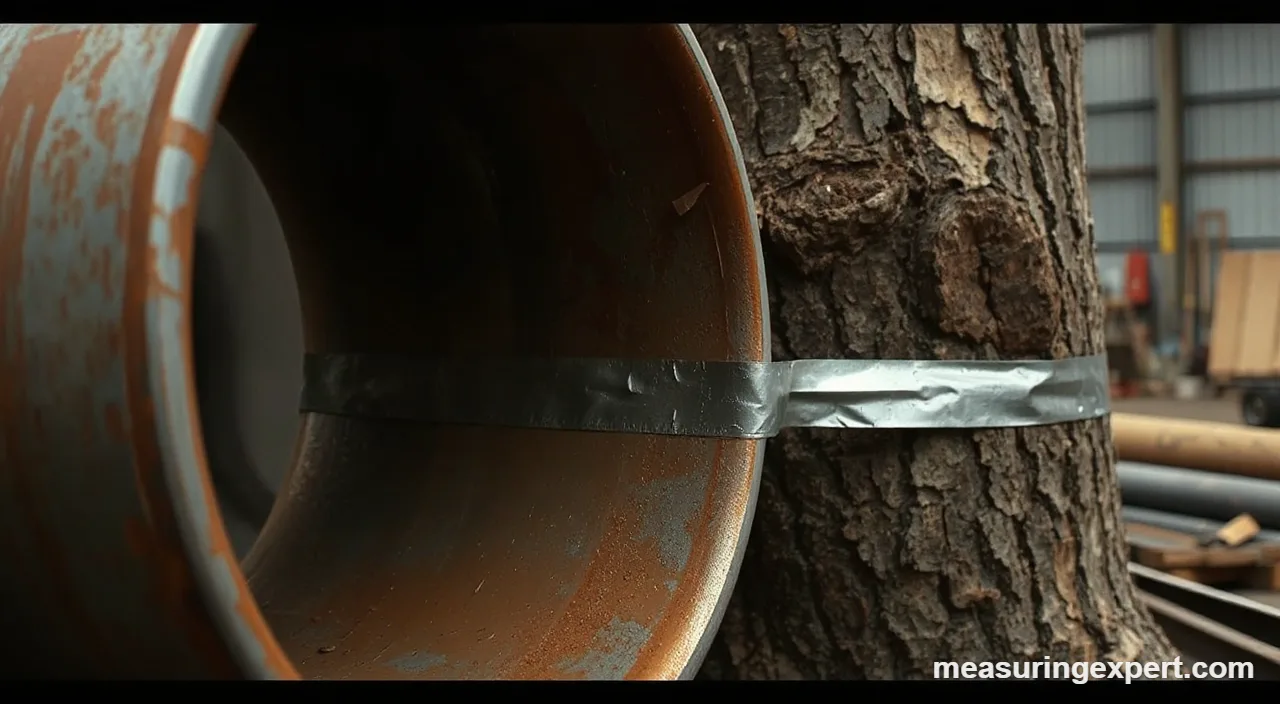
Often you measure girth because you cannot reach across the object. A pipe in a wall, a post set in concrete and a tree trunk are all easier to wrap than to span. The conversion is one line: diameter = girth / pi, and radius = girth / (2 x pi).
| Girth | Diameter (cm) | Diameter (in) | Radius (cm) |
|---|---|---|---|
| 10 cm (3.9 in) | 3.18 cm | 1.25 in | 1.59 cm |
| 20 cm (7.9 in) | 6.37 cm | 2.51 in | 3.18 cm |
| 30 cm (11.8 in) | 9.55 cm | 3.76 in | 4.77 cm |
| 50 cm (19.7 in) | 15.92 cm | 6.27 in | 7.96 cm |
| 75 cm (29.5 in) | 23.87 cm | 9.4 in | 11.94 cm |
| 100 cm (39.4 in) | 31.83 cm | 12.53 in | 15.92 cm |
| 150 cm (59.1 in) | 47.75 cm | 18.8 in | 23.87 cm |
For a worked example, a 94 inch girth on a tree gives 94 / 3.14159 = 29.9 inches of diameter. The same trick works backward: if a pipe has a 32 mm outside diameter, its girth is 32 x 3.14159 = 100.5 mm, so a strip of tape that long wraps it exactly once.
Measuring the Girth of Pipes, Trees, Packages and Animals
Pipes and posts
Wrap a flexible tape or a pi tape around the outside, then divide by pi. A pi tape is printed with the diameter already converted, so you read it directly. Clean off paint drips and rust first, because they add to the size.
Trees
Foresters usually measure trunk girth at about 4.5 feet (1.37 m) above the ground on the uphill side, then divide by pi for diameter at breast height. On a leaning tree, measure square to the trunk, not square to the ground. Skip ivy, vines and loose bark.
Packages
Carriers define girth as the distance around the two smaller sides of the box: 2 x (width + height). For a box 40 cm long, 30 cm wide and 20 cm high, girth is 2 x (30 + 20) = 100 cm, and length plus girth is 140 cm, or about 55.1 inches. Size limits differ by carrier and service, so check the carrier’s current rules.
Animals and gear
For a horse, dog harness or saddle strap, measure the chest just behind the front legs, with the tape flat and no skin folds trapped. Follow the maker’s chart, because brands size differently.
Honest Limits
A tape measure is a simple tool, and its results carry error. Expect a difference of about 0.5 to 1 cm between repeat readings on a body, and more if the tape is stretched, creased or old. Soft tissue compresses, posture shifts the waist, and breathing changes the chest. Self-measurement is usually less consistent than measurement by a trained person, so treat any single number as an estimate and watch the trend over weeks rather than days.
Also remember that a girth number says nothing about shape, muscle, fat or health on its own. Pooled averages hide wide natural variation, and benchmarks such as the waist figures above are screening aids for large groups, not rules for one person.
When to Call a Professional
- Sudden swelling. If one arm, leg or your waist grows quickly or painfully, see a doctor. Do not rely on a tape.
- Compression garments and braces. A certified fitter measures with their own method and the maker’s chart.
- Custom tailoring. A tailor can take a full set and account for posture and fit.
- Weight or heart concerns. A doctor or dietitian can interpret waist girth alongside other measures.
- Engineering tolerances. If a pipe or shaft needs a fit within tenths of a millimeter, use calibrated tools and a qualified machinist.
Frequently Asked Questions About Measuring Girth
What does girth mean?
Girth is the distance around something, which is the same as its circumference. In measuring, it usually refers to a body part, a tree trunk, a pipe or a parcel, and it is read with a flexible tape wrapped once around.
How do you measure girth with a tape measure?
Wrap a flexible tape once around the part, keep it level and flat with no twists, snug but not squeezing, then read where the end meets the start. Repeat three times and average the readings.
What is the formula to turn girth into diameter?
Divide the girth by pi (3.14159). A girth of 100 cm gives a diameter of 31.83 cm. To go the other way, multiply the diameter by pi.
Is girth the same as circumference?
For most purposes yes. Shipping is the exception: carriers define package girth as 2 x (width + height) of the two smaller sides, which is the distance around the box cross-section, not a circle.
How do I measure girth without a flexible tape?
Use a piece of string or a strip of paper, wrap it once around, mark the overlap, then lay it flat along a ruler and read the length. Do not stretch the string as you mark it.
What waist girth is linked to higher health risk?
The US National Heart, Lung, and Blood Institute lists a waist of more than 35 inches (88.9 cm) for women and more than 40 inches (101.6 cm) for men as higher risk. It is a screening hint, not a diagnosis.
Should I measure girth over clothing?
Measure over bare skin or one thin layer. Thick clothing adds inches and makes the result unreliable. If you are sizing a garment, note what you wore and compare with the maker size chart.
How do I convert a girth in cm to inches?
Divide the centimeters by 2.54. For example, 94 cm is 37.0 inches. To convert inches to cm, multiply by 2.54. The calculator on this page does the conversion for you.
When is the best time of day to measure body girth?
Pick one time and keep it. Many people measure in the morning before eating, because food, water and posture can change a waist reading by a centimeter or two over the day.
How tight should the tape be?
Tight enough that it lies flat against the skin or surface without slipping, and loose enough that it does not dent the skin. You should be able to slide one finger under the tape.
The Short Version
To measure girth well, choose the spot, keep the tape level, flat and snug, read it at the overlap, and repeat three times. Divide by pi for diameter and by 2.54 for inches, and keep the same tape, time and landmark so that the numbers can be compared.
Use the converter and the tables on this page for quick checks, choose a tape that suits the job, and treat every number as an estimate. For anything about health, ask a professional rather than a tape measure.
Listen to a free audiobook while you cook, work or wait
5 thoughts on “How to Measure Girth: Body, Pipes, Trees and Packages”