

Key Takeaways
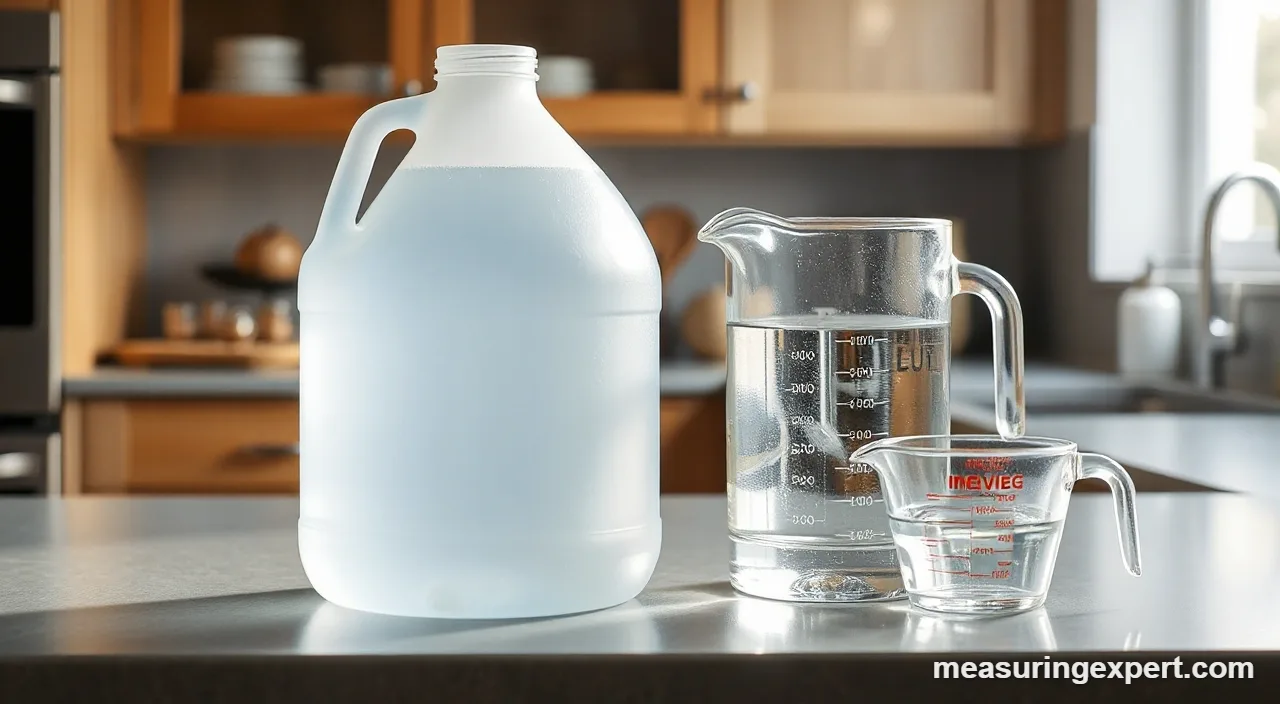
Pour a gallon of water into 2 L bottles and you fill one completely and the second almost to the top, which is the quickest way to feel how big 3,785 mL is. Many people expect a gallon to be a neat 4 liters, but it falls 215 mL short of that, a gap a bit smaller than a cup of liquid.
The number is exact because the US gallon is defined as 231 cubic inches, and the inch is defined as 25.4 mm. Multiply it through and you get 3,785.411784 mL. The NIST Handbook 44 unit tables state the same value in liters.
This page gives the exact figures, a chart from a quarter gallon to 5 gallons, the UK and dry gallon differences, how to measure a gallon with household items, and the rounding that catches people out.
Gallons to Milliliters Chart
Use the table for the amounts people look up most often. Milliliters are rounded to two decimals and liters to three. In addition, the fluid ounce column helps when a recipe or label mixes units.
| US gallons | Milliliters | Liters | US cups | US fl oz |
|---|---|---|---|---|
| 0.25 gal | 946.35 | 0.946 | 4 | 32 |
| 0.5 gal | 1,892.71 | 1.893 | 8 | 64 |
| 0.75 gal | 2,839.06 | 2.839 | 12 | 96 |
| 1 gal | 3,785.41 | 3.785 | 16 | 128 |
| 1.5 gal | 5,678.12 | 5.678 | 24 | 192 |
| 2 gal | 7,570.82 | 7.571 | 32 | 256 |
| 2.5 gal | 9,463.53 | 9.464 | 40 | 320 |
| 5 gal | 18,927.06 | 18.927 | 80 | 640 |
Need the opposite direction? Divide milliliters by 3,785.41. For example, 10,000 mL is 2.642 gallons. For smaller steps down the ladder, see how many mL are in a quart, and for ounces in a few cups, the page on 4 cups to ounces helps.
Gallon, Quart, Pint and Cup in mL
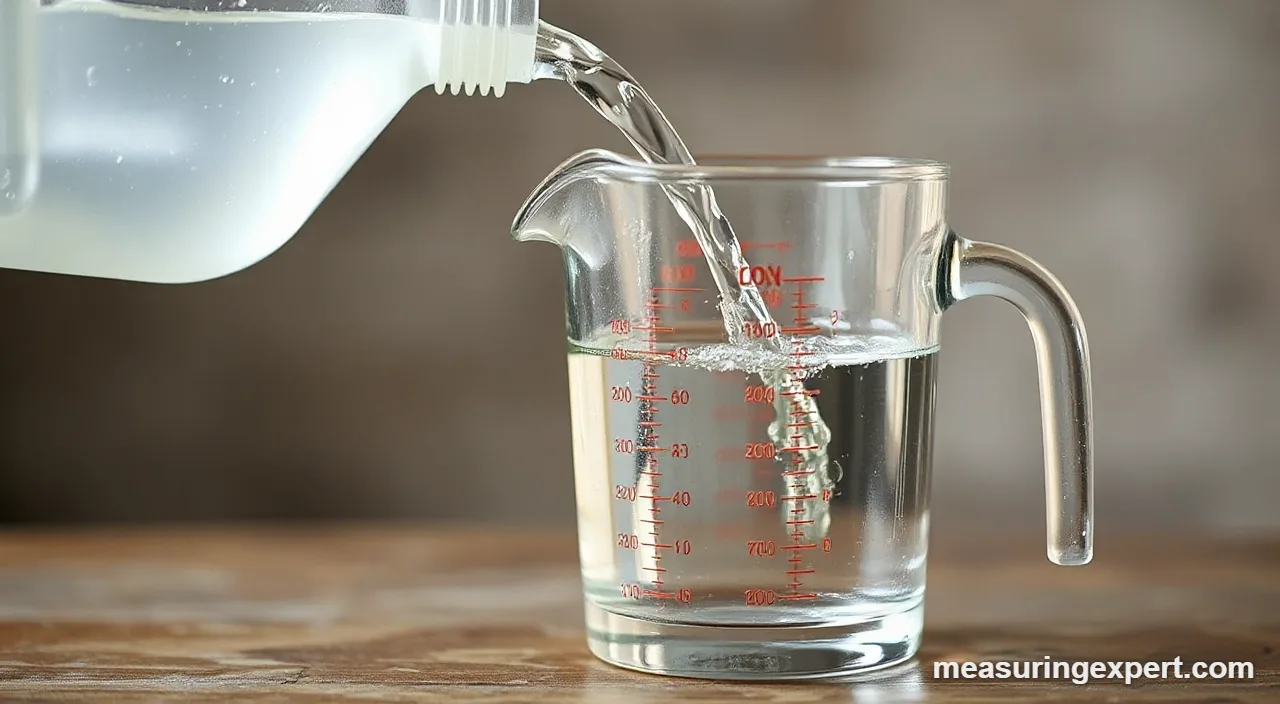
The US system splits a gallon into halves each time: 4 quarts, 8 pints, 16 cups or 128 fluid ounces. The bars below show how each size compares, with milliliters on the right.
| Unit | In a gallon | Milliliters (exact basis) |
|---|---|---|
| Quart | 4 | 946.353 |
| Pint | 8 | 473.176 |
| Cup | 16 | 236.588 |
| Fluid ounce | 128 | 29.5735 |
| Tablespoon | 256 | 14.7868 |
| Teaspoon | 768 | 4.92892 |
US, Imperial and Dry Gallons Are Not the Same
A “gallon” label means different volumes depending on the country and on what is being measured. This is where most bad conversions start, so check the source of the number before you use it.
| Gallon type | Milliliters | Liters | Compared with US gallon |
|---|---|---|---|
| US liquid gallon | 3,785.41 | 3.785 | Baseline |
| Imperial (UK) gallon | 4,546.09 | 4.546 | About 20.1 percent larger |
| US dry gallon | 4,404.88 | 4.405 | About 16.4 percent larger |
| Label-rounded US gallon | 3,785 or 3,800 | 3.8 | Rounded for packaging |
Gallon Jugs and Pitchers for Accurate Pouring
A marked pitcher beats guessing. Look for a clear, rigid body, graduations in both US units and milliliters, and markings that are molded in rather than printed on. For small doses, add a graduated cylinder with mL markings.


Buying from this list? Get it fast, and catch Black Friday deals, with Prime
As an Amazon Associate, Measuring Expert earns from qualifying purchases.
How to Measure a Gallon Without a Gallon Jug
A real gallon container is the best check, but you can make one from common items. This works for water and thin liquids, and it needs only a liter bottle and a measuring cup.
- Choose a clean 1 L bottle or a 2 L bottle with a marked fill line.
- Fill and pour the 1 L bottle 3 times into your large container. That is 3,000 mL.
- Add 785 mL, which is 3 US cups plus 5 tablespoons, to reach 3,785 mL.
- Mark the water level with a waterproof pen on the outside of the container.
- Empty it, then re-check the line with a second fill. Repeat until it matches twice.
Check: 3 cups is 709.8 mL and 5 tablespoons is 73.9 mL, which add to 783.7 mL, within 2 mL of the 785 mL target. A gallon-size pitcher with a printed scale is simpler if you do this often.
What a Gallon of Water Weighs
People ask how many milliliters are in a gallon when they really want to know the weight. Water is simple: 1 mL weighs about 1 g at room temperature, so a US gallon of water weighs about 3.78 kg, or roughly 8.3 lb.
| Liquid | Approximate gallon weight | Note |
|---|---|---|
| Water (room temp) | 3.78 kg (8.3 lb) | Density about 0.998 g/mL |
| Milk | About 3.9 kg (8.6 lb) | Density depends on fat content |
| Vegetable oil | About 3.5 kg (7.7 lb) | Lighter than water |
Other liquids differ because their density differs, so the volume number alone cannot tell you the weight. Always check a density source for the exact liquid, as explained in our guide to dry volume, liquid volume and weight.
Gallon Conversion Do and Don’t
Do
- Use 3,785.41 mL for precise work.
- Say “US gallon” or “imperial gallon” in notes.
- Convert to liters first when working with metric labels.
- Check large tank volumes with a flow meter or a known container.
Don’t
- Round a gallon to 4 L, which overstates it by 5.7 percent.
- Use a UK recipe’s gallon in a US pot without converting.
- Assume 1 gallon of any liquid weighs 8.3 lb.
- Use a gallon jug to measure medicine.
Honest Limits and Rounding
The US gallon is exact by definition, but your container is not. Plastic jugs flex, printed gallon marks can be off by a few percent, and the fill line on a pitcher is a guide. Therefore, 3,785 mL on paper is not what you necessarily pour.
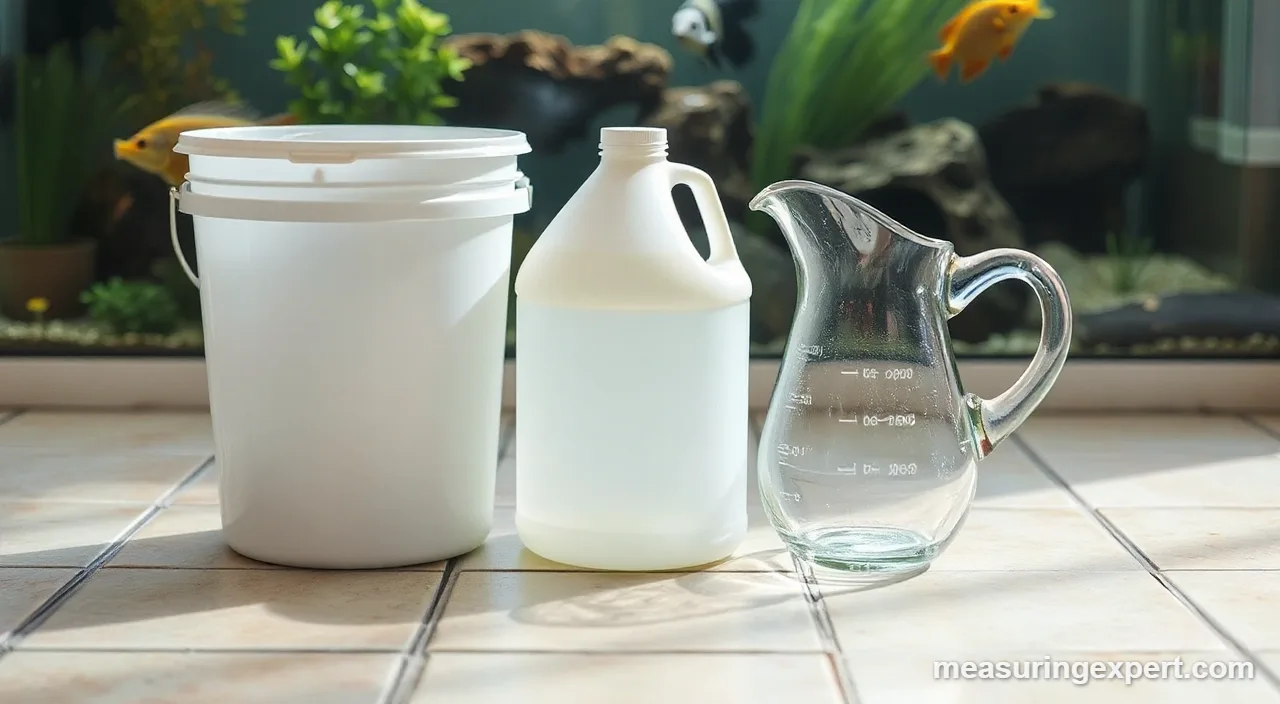
Rounding also changes outcomes. At 3,800 mL, a gallon is 0.4 percent over; at 4,000 mL, 5.7 percent over. For a one-gallon fish tank water change that gap is harmless, but for a chemical dilution it can matter.
When Accuracy Really Matters
Cooking and cleaning allow some slack. A few jobs do not. Aquarium and pond treatments are dosed per gallon or per liter of tank volume, so measure the tank and not the label. Canning brines, brewing and fermenting follow recipes where the salt-to-water ratio affects safety. Pool and garden chemicals need the maker’s dose and a proper measuring cup.
When a mistake could affect health, safety or equipment, use the unit printed in the instructions, convert once with the exact figure, and write the result down. If you still cannot decide, ask a pharmacist, the product maker or a qualified technician. For picking a jug that reads clearly, see how to use a measuring jug.
Frequently Asked Questions
How many mL are in a gallon?
There are 3,785.41 mL in one US liquid gallon. Labels often round this to 3,785 mL or 3.8 L. An imperial gallon holds 4,546.09 mL.
How many liters are in a gallon?
A US gallon is 3.785 liters. An imperial (UK) gallon is 4.546 liters, and a US dry gallon is 4.405 liters.
Is a gallon 4 liters?
No. A US gallon is 3.785 L, which is 215 mL less than 4 L. Using 4 L overstates the volume by about 5.7 percent.
How many mL are in half a gallon?
Half a US gallon is 1,892.71 mL, or 1.893 L. That equals 2 quarts, 4 pints or 8 cups.
How many mL are in a quart?
A US quart is 946.35 mL, which is one fourth of a gallon. A quart is therefore slightly less than a liter.
How many cups are in a gallon?
There are 16 US cups in a gallon. Each cup is about 236.59 mL, and 16 cups give 3,785.41 mL.
How many fluid ounces are in a gallon?
One US gallon holds 128 US fluid ounces. Each fluid ounce is 29.5735 mL.
How many mL are in a gallon of water by weight?
Water weighs about 1 g per mL, so a gallon is about 3,785 g (3.78 kg, 8.3 lb) at room temperature.
What is the UK gallon in mL?
The imperial gallon is 4,546.09 mL. It is about 20 percent larger than the US gallon, so recipes from the UK need converting.
Can I use a gallon jug for medicine or chemicals?
No. Use the dosing cup or syringe that comes with the product, and ask a pharmacist or the manufacturer if you are unsure about the amount.
Bottom Line
One US gallon is 3,785.41 mL, so round to 3,785 mL for recipes and labels and never to 4,000. For a UK gallon use 4,546 mL.
Pick the container that fits the job, check which gallon a source means, and use the exact value when doses or tank volumes matter.
Add ad-free music to your kitchen or workshop
1 thought on “How Many mL in a Gallon? 3,785 mL (US) Explained”