

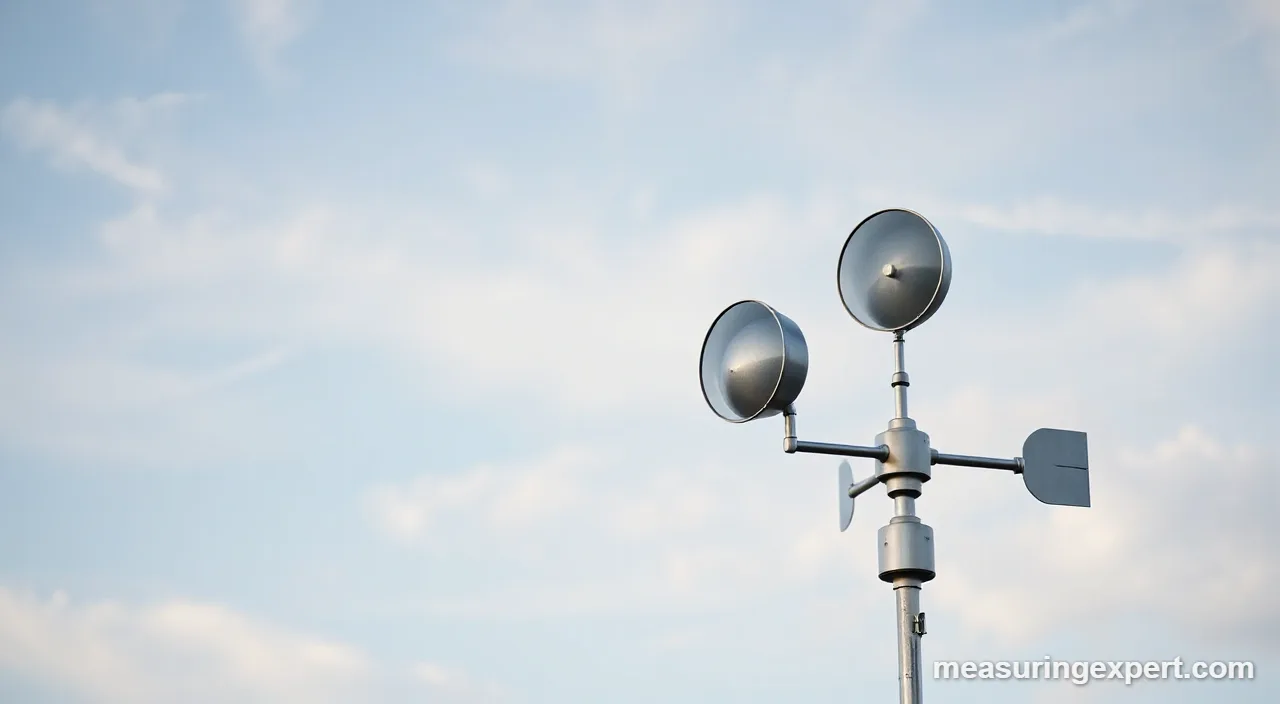
Picture a windy afternoon and a neighbor who swears the gusts hit 50 mph. You have a patio umbrella in the shed and a kite in the car, and you would like to know who is right. Fortunately, wind speed is one of the easier weather quantities to measure.
You measure wind speed by letting the air do work on a sensor and converting that motion into a number. A cup anemometer counts how fast its cups spin, a hot-wire meter measures how much air cools a heated wire, an ultrasonic unit times sound pulses crossing the air, and a pitot tube turns air pressure into speed. With no instrument at all, the Beaufort scale lets you estimate speed from how trees, smoke and water behave.
In short: for most people a handheld digital anemometer held into the wind for a minute is the quickest way to get a trustworthy number.
Official weather stations follow standard practice, and the National Weather Service explains that its ASOS airport stations report a 2-minute average wind updated every few seconds. You can read the details on the NWS ASOS wind sensor page. That average-versus-gust distinction matters when you compare your own reading with a forecast.
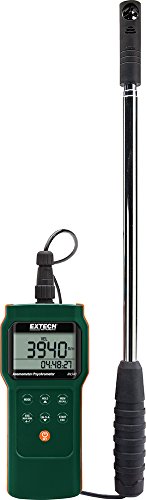


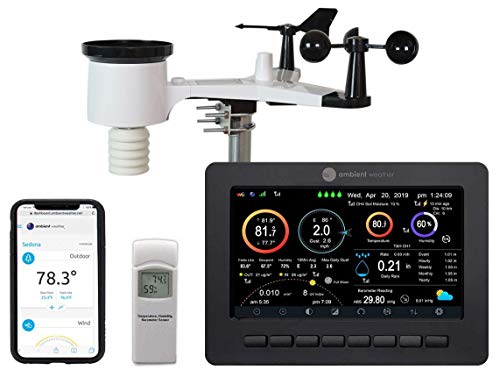


Buying from this list? Get it fast, and catch Black Friday deals, with Prime
Convert Wind Speed Between m/s, mph, Knots and km/h
Anemometers sold around the world display different units. Type your reading and switch the unit.
This page walks through each method, shows how to take a clean reading, and includes a converter and a simple build-your-own design.
Formula: mph = m/s / 0.44704, knots = m/s / 0.514444, km/h = m/s x 3.6. Example: 8 m/s = 17.9 mph = 15.6 knots = 28.8 km/h.
- Cup and vane anemometers are the classic outdoor sensors.
- Hot-wire meters suit ducts and gentle airflow; ultrasonic meters have no moving parts.
- The Beaufort scale estimates speed from what you can see.
- Measure in open air, as high as practical, away from walls and trees.
- Average a minute of readings and note the peak separately.
- A homemade anemometer needs calibration against a known reference.
- Convert units before comparing: knots, mph, km/h and m/s all appear.
The Cup Anemometer: the Standard Workhorse
Most people picture a cup anemometer when they hear the word. Three or four small cups sit on arms around a vertical shaft. Wind pushes harder on the open face of a cup than on the rounded back, so the assembly turns, and the faster the wind, the faster it spins.
A sensor counts rotations, usually with a magnet and a reed switch or an optical pulse, and an electronics module converts the pulse rate to speed using a calibration factor. The design is simple, rugged and cheap to repair, which is why it has been used at weather stations for well over a century.
Its weaknesses are inertia and friction. Cups take a moment to speed up in a gust and a moment longer to slow down, so they tend to over-read in turbulent air, and bearings wear out. Many models also need a minimum breeze to start turning.
Other Ways to Sense Moving Air
Cups are not the only option. Different sensors suit different jobs, and the table shows how they compare.
| Sensor | How it works | Best for | Watch out for |
|---|---|---|---|
| Cup anemometer | Cups spin, rotations are counted | Outdoor stations, general wind | Bearing wear, slow start |
| Propeller or vane | A small propeller turns into the wind | Handheld meters, wind plus direction | Must face the wind |
| Hot-wire | Airflow cools a heated wire; power needed gives speed | Ducts, vents, low speeds | Dirt and moisture on the wire |
| Ultrasonic | Sound pulses cross the airflow; timing gives speed | Fixed stations, no moving parts | Higher cost, heavy rain |
| Pitot tube | Pressure difference converted to speed | Aircraft, vehicles, test rigs | Blockage, icing |
Our guide to how to use an anemometer goes into each type with practical steps, and the roundup of handheld anemometers helps if you want to buy one.
No Instrument? Use the Beaufort Scale
Admiral Francis Beaufort’s scale turns observations into speed ranges. It is rough, but it requires nothing except eyes. The following rows are from the National Weather Service Beaufort table.
| Force | mph | knots | Clue on land |
|---|---|---|---|
| 1 Light air | 1-3 | 1-3 | Smoke drifts, vanes stay still |
| 2 Light breeze | 4-7 | 4-6 | Felt on face, leaves rustle |
| 4 Moderate breeze | 13-18 | 11-16 | Dust and loose paper rise |
| 6 Strong breeze | 25-31 | 22-27 | Large branches move, wires whistle |
| 8 Gale | 39-46 | 34-40 | Twigs break, walking is hard |
| 10 Storm | 55-63 | 48-55 | Trees uprooted, considerable damage |
The source for these ranges is the National Weather Service’s Beaufort wind scale page. Use it as a cross-check on any instrument: if your meter says 5 mph while large branches are swaying, something is wrong with the reading.
Where and How High to Measure
The location affects the result as much as the sensor. Buildings, fences and trees create turbulent wakes that extend several times their height downwind, and a reading inside one is not representative.
Weather services use a standard height of 10 m (about 33 ft) above open, level ground so that stations can be compared. A home setup rarely gets that high, so choose the best location available: a roof ridge, a tall pole or a clear field. A hand-held reading at head height is lower than the standard value because wind speed rises with height.
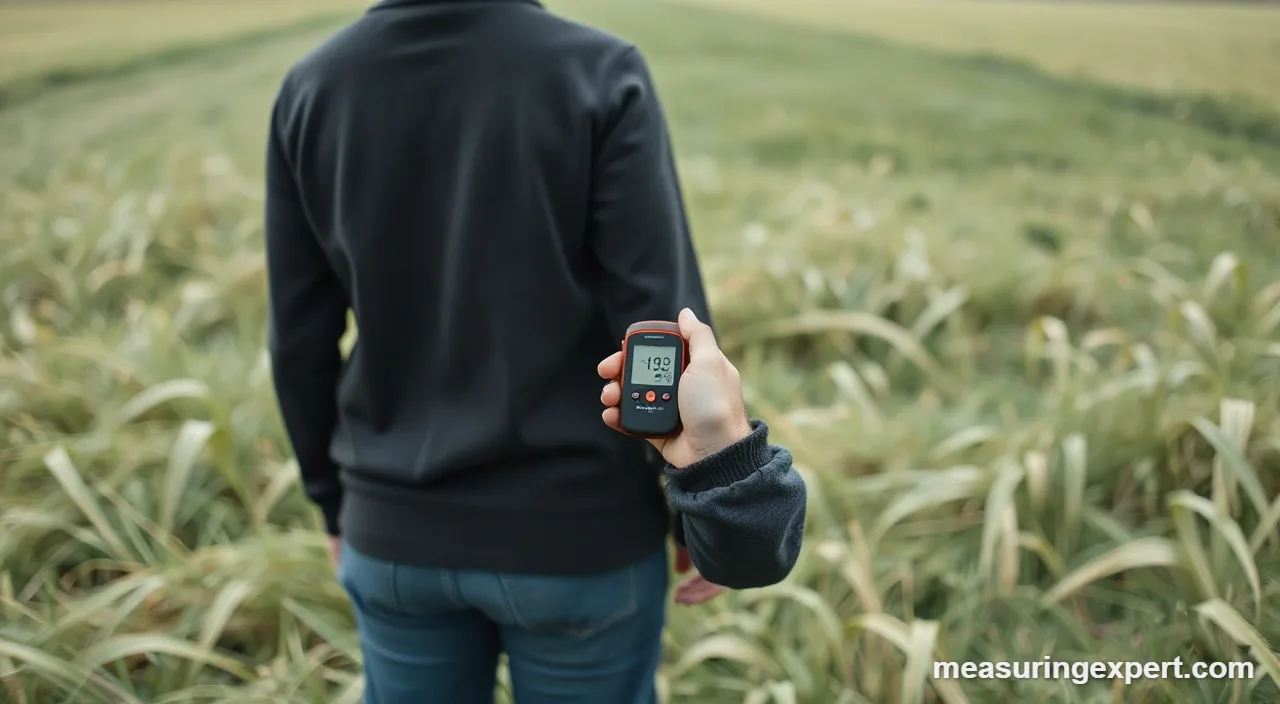
Measure Wind Speed With a Handheld Meter
The process takes about two minutes.
- Power on and check the units. Make sure the display is set to the unit you plan to record.
- Find clear air. Walk to an open spot with nothing taller than a fence nearby on the upwind side.
- Point into the wind. Face the wind with the sensor away from your body so you do not shelter it.
- Hold steady. Keep the meter still for 30 seconds and watch the live number swing.
- Record the average and the max. Many meters have a max or average button, which saves guesswork.
- Repeat twice. Take three readings, a few minutes apart, and average the typical value.
Good habits
- Keep the sensor clean and spin-free
- Use the same height each time
- Log date, time and units
- Zero the meter if it offers a reset
Common mistakes
- Hold it close to your chest
- Measure in a doorway or beside a wall
- Trust a single reading in gusty air
- Leave a cheap meter in rain unless it is rated for it
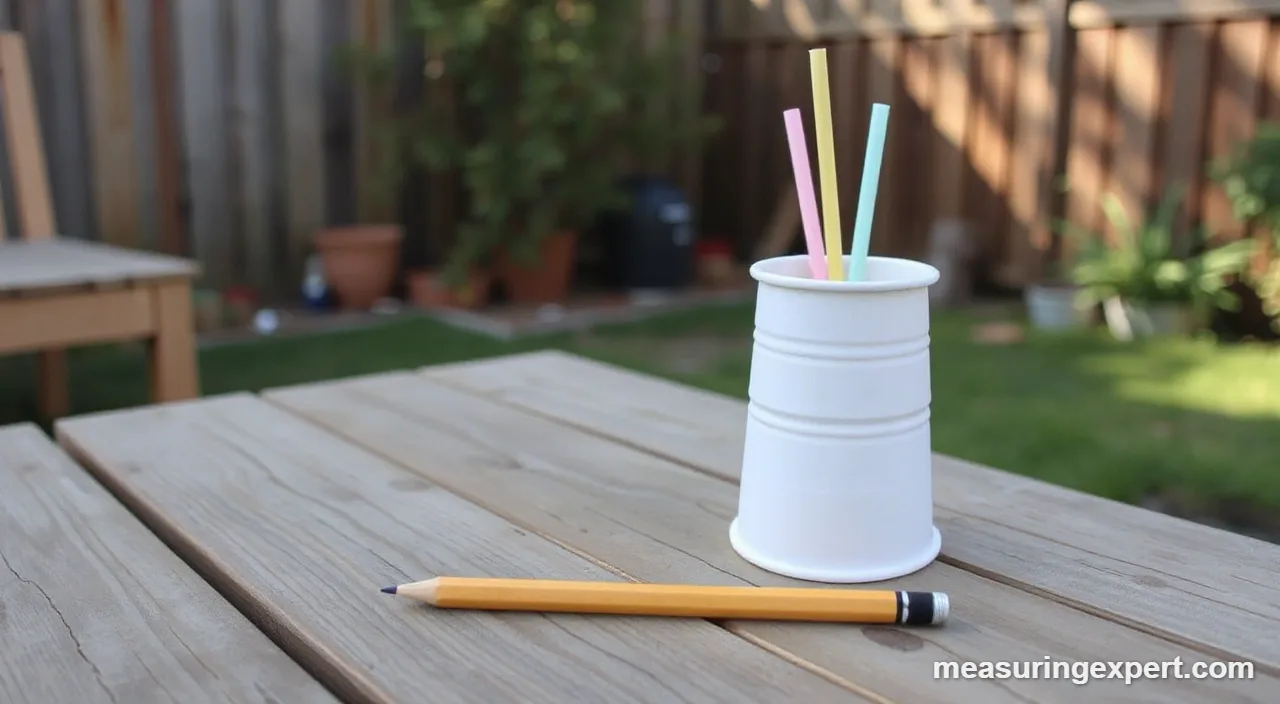
Build a Simple Cup Anemometer
A homemade anemometer is a fine science project and a good way to understand how the real ones work. You need four paper cups, two straws, a pin, a pencil with an eraser and a base. Cross the straws, attach a cup to each end all facing the same way around, and pin the center to the eraser so it can spin freely.
To get a number, mark one cup and count rotations over a fixed time. The cup tip speed is the circumference times rotations per second: 2 x 3.1416 x radius x rotations / seconds. The wind speed is higher than the tip speed, by a factor that depends on cup shape, usually somewhere between 2 and 3 for simple designs, so you must calibrate it.
A home-built unit is a teaching tool. It will not match a calibrated instrument closely, and it works poorly in light wind because of friction.
Measuring Wind You Cannot Reach
Professionals also measure wind high above the ground and over water. Doppler radar and lidar infer wind from the motion of particles in the air, balloons carry sensors aloft, and aircraft compute wind by comparing airspeed (from a pitot tube) with GPS groundspeed. The difference between those two numbers is the wind. Our page on how airplanes measure speed explains the instruments involved.
These methods are not home projects, but they show the same principle: wind is measured by what it does to a sensor.
Honest Limits of Any Wind Reading
Wind is turbulent, so any single number is a snapshot. Your meter might say 12 mph, then 20, then 8 within ten seconds, and all three can be right. Averaging helps, but averaging time changes the answer, so do not compare a 10-second average with a 2-minute official value without allowing for it.
Instruments add their own error. Cheap handhelds can be a few percent off, and low-end ones can be inaccurate at the extremes of their range. A meter near its limits, blocked by your body or wet with rain will give poor results. Compare against a second instrument if the number matters.
When to Call a Professional
For siting a wind turbine, rating a structure for wind load, flying a commercial drone or deciding when a crane must stop, rely on trained people and approved equipment. A calibration laboratory can verify an anemometer against a reference wind tunnel, and an engineer can translate measured wind into design loads.
Anemometers and Weather Stations Worth Considering
The right instrument depends on where you will use it. A pocket meter is ideal for trips and quick checks, while a fixed station gives you a log without effort. Descriptions below are based on manufacturer specs and buyer reports.
As an Amazon Associate, Measuring Expert earns from qualifying purchases.
Questions People Ask
How can we measure the speed of the wind?
Use an anemometer. Cup, propeller, hot-wire and ultrasonic models all convert moving air into a number. Without one, estimate speed with the Beaufort scale.
What is the most common wind speed instrument?
The cup anemometer, with three or four cups on a vertical shaft, is the classic outdoor sensor. Ultrasonic units are increasingly common on modern stations.
Can I measure wind speed with my phone?
Not accurately. Phones have no real wind sensor. Apps either show nearby station data or use the microphone, which gives rough results. Attachments with a small propeller are better.
How high should an anemometer be?
Official standard is about 10 m (33 ft) over open ground. At home, mount it as high and clear as practical and record the height.
What is the difference between wind speed and wind velocity?
Wind speed is how fast the air moves. Wind velocity adds direction. Most meters report speed, while weather vanes give direction.
How do you measure wind speed without a tool?
Watch smoke, leaves, trees and water and compare with the Beaufort scale. A gentle breeze of 8 to 12 mph keeps leaves and small twigs moving.
How accurate are handheld anemometers?
Good ones can be accurate to a few percent in steady air, but gusts, handling and siting often cause more error than the sensor.
What units do anemometers use?
Meters per second, miles per hour, kilometers per hour and knots. The converter above switches between them.
What is a gust?
A short-lived peak in speed above the average, lasting a few seconds. Forecasts list gusts separately because they cause most wind damage.
Do I need to calibrate an anemometer?
Professional use may require it. At home, check against a second meter or a known reference, and replace one that drifts or sticks.
The Short Version
The short version: to measure the speed of the wind, use an anemometer in open air, hold it into the wind for a minute, and record both the average and the peak. If you have no instrument, the Beaufort scale gets you within a rough range using only what you can see.
Pick the sensor for the job, keep it clear of obstacles and write down the height and units. Treat home readings as good local information, and leave safety-critical decisions to official warnings and qualified professionals.
Prime for Young Adults: a longer free trial and a lower price after it